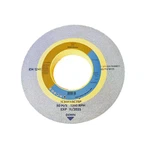
When performing superfinishing, it is very important to choose the right honing stone. The correct sharpening stone selection has a great impact on the quality, production efficiency and production cost of superfinishing. Superfinishing is a low-speed, low-temperature and low-pressure micro-grinding process. The honing stone is not trimmed during work, but its processing characteristics must be maintained during the cycle processing. Therefore, the oilstone must have both cutting performance and finishing and polishing performance. The factors that determine the performance of the sharpening stone include abrasive, abrasive grain size, binder, structure, hardness and hardness uniformity.
1. Abrasives of honing stone
The abrasives used to make oilstone include WA, GC, SC, WA/GC (mixed abrasive), WA/SC (mixed abrasive), WA/C (graphite sharpening stone), etc. WA/GC (mixed abrasive) and WA/SC (mixed abrasive) are commonly used in the bearing industry.
2. Grain size of abrasive
There are 14 levels of micro powder grain size for making honing stone, from W63 to W0.5. The micro powder number used for super refined oilstone in the bearing industry is generally between W2.5 and W28. Coarse grain size has strong cutting ability and high production efficiency; fine grain size has low cutting efficiency and low production efficiency, but low surface roughness. There is a certain relationship between micro powder grain size and surface roughness, see the table below.
Relationship between abrasive grain size, surface roughness and machining allowance
|
Abrasive grain size/um |
W28 |
W20 |
W14 |
W10 |
W7 |
W5 |
|
Particle size/um |
28-20 |
20-14 |
14-10 |
10-7 |
7-5 |
5-3.5 |
|
Roughness Ra/um |
0.10-0.15 |
0.08-0.12 |
0.05-0.08 |
0.025-0.05 |
0.02-0.025 |
0.012-0.025 |
|
Machining allowance on diameter/um |
12-16 |
10-12 |
8-10 |
6-9 |
5-8 |
3-5 |
3. Honing stone binder
sharpening stone binders include ceramic, resin, glass ceramic, polyethylene and graphite. Sharpening stone binders should maintain a certain firmness of abrasive bonding and be easy to self-sharpen. In the bearing industry, ceramic binders are the most commonly used in superfinishing.

4. The structure of honing stone
The structure of sharpening stone is loose and has a large porosity, which can increase the space for accommodating grinding chips, improve the working state of oilstone, and increase the pressure of grinding stone. Grinding stone will not stick to chips and scratch the workpiece, but the porosity is too large, the cutting self-sharpening is too strong, the oilstone is consumed too quickly, the finishing effect is poor, and the surface roughness Ra is high. Therefore, the porosity of grinding stone should be appropriate. Generally, the structure number of bearing superfinishing sharpening stone is 10~12 (porosity 43%~49%).
5. Hardness and hardness uniformity of honing stone
The hardness of sharpening stone directly affects its self-sharpening during processing. If the hardness is too low, the abrasive grains will be separated too quickly. Within a certain range of grinding dosage, the superfinishing polishing process cannot be formed, and the surface roughness cannot meet the requirements. If the oilstone is too hard, its working surface is easily clogged and cannot cut, and it cannot meet the requirements of superfinishing. Generally, the rougher the surface to be processed, the coarser the grinding stone grains and the higher the hardness; if the surface hardness to be processed is very high, a softer grinding stone should be selected. For materials with high hardness, a low-hardness oilstone should be selected, and for materials with low hardness, a high-hardness sharpening stone should be selected.
For bearing superfinishing, a hardness value of about 50HRC is generally selected. The uniformity of honing stone hardness refers to the difference in hardness of each part of the grinding stone. During superfinishing, the contact area between the oilstone and the surface of the ring is large, so the uneven hardness of the sharpening stone directly causes the uneven surface roughness of the ring, which will also affect the shape accuracy of the ring. The uniform hardness value of the honing stone should be within 3~5HRC.