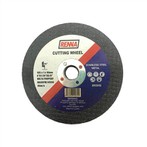
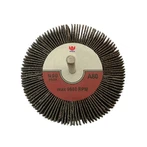
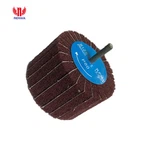
Some customers, due to a lack of understanding of white aluminum oxide abrasives, easily purchase substandard products, resulting in unusable items. Should we just let them go to waste? Of course not! Therefore, we need to learn how to change the surface roughness of white aluminum oxide abrasives to restore their effectiveness. We'll also teach you some methods for selecting abrasives.
Good abrasives typically meet three conditions
1. Sufficient hardness
2. Good geometry and sharp edges
3. Good grain size distribution
The particle size distribution of abrasives is controlled through careful sorting; particle size and particle size distribution are important physical and technical parameters of abrasives, directly affecting the processing performance and usage of products. Therefore, the determination of abrasive particle size and particle size distribution has become one of the important means to ensure product quality and develop new products.
Methods to change the roughness of white aluminum oxide abrasive
1. Increase the grinding wheel speed or decrease the workpiece speed.
2. Use a smaller longitudinal feed rate.
3. Use the correct type, ratio, pressure, flow rate, and cleanliness of the cutting fluid.
4. By improving the balance accuracy of the grinding wheel, the rotational accuracy of the grinding spindle, the motion stability of the worktable, the rigidity of the entire process system, and reducing vibration during grinding, the surface roughness of white aluminum oxide abrasive can be significantly improved.
5. If you are using a white aluminum oxide grinding wheel with a larger diameter, you can increase the wheel width, etc.
All of these methods can significantly improve the surface roughness of white aluminum oxide abrasive; you might want to give them a try. While these methods are feasible, to improve efficiency, we must refer to the selection criteria when purchasing them to reduce unnecessary trouble.