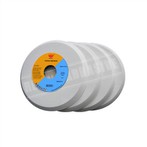
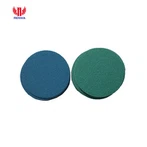
In industrial grinding and surface finishing processes, the performance of a velcro sanding disc directly affects machining efficiency, surface quality, and operating costs. A high-quality sanding disc is not only required to remove material effectively but also needs to maintain stable performance under continuous grinding conditions.
To meet the demands of different industrial applications, abrasive products should have proper hardness, strength, heat resistance, and chemical stability. The following are the key characteristics that determine the performance of a reliable grinding disc.
1. High Hardness for Efficient Material Removal
The hardness of the abrasive grain must be higher than that of the workpiece material. Otherwise, the abrasive cannot effectively cut and remove surface material.
During grinding operations, the abrasive particles need to maintain sharp cutting edges to achieve fast material removal. Whether processing metal, wood, composites, or other materials, the hardness of the abrasive determines the cutting ability and overall efficiency of the sanding process.
2. Balanced Fracture Resistance and Self-Sharpening Ability
A good velcro sanding disc should have a proper balance between toughness and self-sharpening performance.
During grinding, abrasive grains are exposed to pressure, impact, and friction. If the grains are too fragile, they will break down too quickly, reducing service life and causing unstable grinding results. However, if the grains are too tough, worn particles may remain on the surface without forming new cutting edges, reducing grinding efficiency.
The ideal abrasive grain can gradually fracture under proper grinding pressure, exposing fresh sharp edges and maintaining continuous cutting performance throughout the process.
3. Excellent Thermal Stability During Grinding
Grinding generates a large amount of heat, especially during high-speed machining or heavy-duty applications. Therefore, abrasive discs must maintain their hardness and mechanical strength even under elevated temperatures.
Good thermal stability helps reduce problems such as workpiece discoloration, thermal damage, and premature wear of the abrasive material. It also improves consistency during long-term grinding operations.
4. Good Chemical Stability for Different Materials
Grinding is not only a mechanical process; chemical reactions may also occur between the abrasive and the workpiece, especially when processing certain metals or alloys.
A high-quality velcro sanding disc should have good chemical stability to prevent unwanted reactions with the workpiece material. This helps maintain grinding efficiency, extend product life, and achieve a cleaner surface finish.
5. Strong Backing and Reliable Bonding Performance
Besides abrasive properties, the backing material and bonding system also play an important role in disc performance. A strong backing allows the sanding disc to withstand repeated pressure and movement, while a reliable hook-and-loop attachment ensures quick installation and stable operation.
For industrial applications requiring frequent disc replacement, a well-designed velcro sanding disc can improve working efficiency and reduce downtime.
In conclusion, choosing the right abrasive product requires considering hardness, self-sharpening ability, heat resistance, chemical stability, and structural strength. A well-balanced velcro sanding disc can provide stable grinding performance, longer service life, and better surface finishing results across various industrial applications.