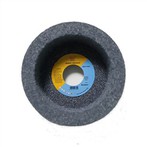
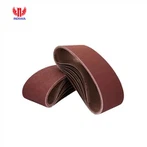
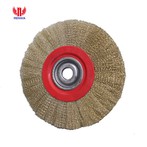
After stamping, machining, forging, and casting processes, steel parts often develop burrs on their surfaces. These burrs can affect appearance, cause assembly problems, accelerate equipment wear, and even create safety risks for operators. Compared with traditional files and grinding wheels, abrasive belts are becoming a more efficient solution for steel deburring.

1. Four Main Applications of Abrasive Belts
1. Deburring Stamped Parts (Most Common Application)
Sharp edges and burrs on sheet metal parts and hardware components can be quickly removed with belt grinding products. The flexible grinding action can also create a smooth edge radius while maintaining high efficiency and good surface quality.
2. Deburring Machined Parts
Hidden burrs on shafts, gears, threads, and other complex components can be accurately removed by selecting the proper grit size. This helps improve surface quality without affecting the dimensional accuracy of the workpiece.
3. Deburring Forged and Cast Parts
For heavy burrs and oxidation layers, flexible grinding belts can easily follow irregular surfaces and complete burr removal as well as initial surface finishing in one operation.
4. Automated Batch Deburring
When combined with belt grinding machines or robotic systems, abrasive solutions enable continuous and standardized processing, greatly improving production efficiency for large-volume manufacturing.
2. Five Key Advantages of Abrasive Belts
1. High Efficiency
Compared with manual files, industrial grinding belts can improve deburring speed by 3–5 times. They also provide good resistance to clogging, making them suitable for continuous production.
2. Better Precision
The flexible grinding performance reduces the risk of edge damage and surface scratches while maintaining the original dimensions of the workpiece.
3. Lower Cost
With excellent wear resistance and convenient replacement, these grinding products help reduce consumable costs and improve overall production efficiency.
4. Safer Operation
Compared with traditional grinding methods, abrasive belts produce less dust and vibration, while reducing the risk of slipping or abrasive breakage during operation.
5. Wide Application Range
They can be used for various materials, including carbon steel, stainless steel, alloy steel, and workpieces with different shapes and structures.
3. Three Important Considerations
1. Choose the Right Abrasive Belt
For carbon steel and alloy steel deburring, aluminum oxide belts offer a good balance between performance and cost. For stainless steel applications, ceramic grinding belts are often preferred. Coarse grits such as 40–80 grit are suitable for heavy burr removal, while 80–120 grit works well for general deburring.
2. Follow Proper Operating Methods
Proper tension and grinding speed are important for stable results. During manual operation, keep the tool at around a 45° angle and apply consistent pressure to achieve uniform grinding.
3. Replace Worn Belts in Time
A worn belt may generate excessive heat, cause surface burns, or create secondary burrs. Regular inspection and timely replacement help maintain consistent grinding performance.
Choosing the right abrasive belt and using it correctly can greatly improve steel deburring efficiency, reduce production costs, and achieve better surface quality in industrial applications.