When grinding 304 stainless steel, a silicon carbide abrasive belt may become shiny and glazed after just a few minutes. Metal swarf builds up between the abrasive grains, the belt loses its cutting ability, and grinding becomes increasingly difficult. Brushing the surface may temporarily restore performance, but the clogging soon returns.
Many operators try adjusting pressure or belt speed, only to find that the problem persists. In many cases, the real issue is the abrasive material itself. Silicon carbide is hard and sharp, but its relatively low toughness makes it less suitable for grinding stainless steel. Switching to a zirconia abrasive belt can significantly reduce loading and improve material removal under suitable operating conditions.
To understand why, we need to look at the properties of each abrasive and how they behave during grinding.
1. Why Does Silicon Carbide Clog When Grinding Stainless Steel?
Silicon carbide has a Mohs hardness of approximately 9.5, making it harder than conventional aluminum oxide abrasives. Its sharp cutting edges provide excellent cutting ability. However, high hardness does not automatically mean better grinding performance. Silicon carbide is relatively brittle, with a fracture toughness of around 2–3 MPa·m½.
Under grinding pressure, silicon carbide grains are more likely to fracture or break away rather than wear gradually. This becomes a problem when machining stainless steel.
Austenitic stainless steels such as 304 and 316 have a strong tendency to work-harden. As abrasive grains contact the workpiece, the surface layer can become harder, making material removal more difficult. Instead of cutting efficiently, abrasive grains may fracture or rub against the hardened surface.
The resulting abrasive fragments mix with stainless steel swarf. Under high temperature and pressure, this mixture gets trapped in the spaces between abrasive grains, forming a compact layer of metal deposits. This is known as abrasive loading or belt glazing.
Once loading starts, the problem becomes progressively worse. Covered abrasive grains lose their cutting ability, and the process shifts from cutting to rubbing. More friction generates more heat, while the increased temperature makes stainless steel swarf more likely to adhere to the belt.
Stainless steel also has relatively low thermal conductivity, so heat tends to concentrate in the grinding zone. Under severe conditions, metal transfer and localized bonding can make deposits particularly difficult to remove.
In short, three factors contribute to clogging:
Brittle abrasive grains: Fractured particles mix with metal swarf and block the abrasive surface.
Work hardening: The hardened stainless steel surface makes effective cutting more difficult.
Heat buildup: High temperatures increase metal adhesion and accelerate abrasive loading.
These combined factors explain why a silicon carbide abrasive belt often struggles with stainless steel grinding.
2. Why Does Zirconia Perform Better?
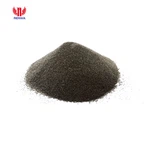
Zirconia fused alumina (ZA), commonly known as zirconia abrasive, is a composite material produced by fusing aluminum oxide and zirconium oxide at high temperatures, followed by rapid cooling. A typical composition contains approximately 58–60% Al₂O₃ and 40–42% ZrO₂.
Its fine eutectic microstructure, consisting of closely distributed alumina and zirconia phases, gives it a distinctive combination of toughness and self-sharpening performance. These properties make a zirconia abrasive belt particularly suitable for heavy-duty metal grinding.
01. Controlled Micro-Fracturing and Self-Sharpening
The main advantage of zirconia fused alumina is its ability to maintain sharp cutting edges under heavy grinding loads.
As the abrasive grains wear, small portions fracture along their microstructure, exposing fresh cutting edges. Unlike large-scale grain breakage, this controlled micro-fracturing helps the abrasive maintain its cutting ability over time.
A zirconia abrasive belt can therefore continue cutting effectively instead of allowing dull grains to remain on the surface and promote loading.
02. Higher Toughness for Heavy-Duty Grinding
Zirconia fused alumina generally offers higher fracture toughness than conventional brown aluminum oxide. Depending on the material grade and test method, reported values are approximately 4.5–6.8 MPa·m½.
This toughness helps abrasive grains withstand heavy pressure without breaking apart too easily. More stable cutting produces more effective chip removal, while reducing the amount of fine abrasive debris that can become trapped between the grains.
03. More Efficient Material Removal
Zirconia fused alumina has a relatively high density and is designed for demanding stock-removal applications. Its ability to maintain sharp cutting edges under pressure helps improve grinding efficiency and reduce unnecessary friction.
In suitable stainless steel applications, a zirconia abrasive belt can deliver higher material removal rates than conventional silicon carbide. Faster stock removal also means less time spent grinding each workpiece, helping limit heat buildup and reduce the risk of surface damage.
3. Silicon Carbide vs. Zirconia: A Practical Comparison
| Comparison | Silicon Carbide (SiC) | Zirconia fused Alumina (ZA) |
|---|---|---|
| Mohs hardness | Approximately 9.5 | Approximately 9.0 |
| Fracture toughness | 2–3 MPa·m½ | 4.5–6.8 MPa·m½ |
| Grain behavior | Relatively brittle; prone to fracture | Controlled micro-fracturing and self-sharpening |
| Stainless steel loading | More likely under unsuitable conditions | Generally lower under suitable conditions |
| Material removal | Application-dependent | Often more efficient in heavy-duty grinding |
| Belt life | Depends on workpiece and operating conditions | Often longer in suitable heavy-duty applications |
| Typical applications | Non-ferrous metals, glass, stone | Stainless steel, carbon steel, titanium alloys |
The comparison shows that silicon carbide is harder, but zirconia fused alumina offers greater toughness and better performance in many heavy-duty steel grinding applications.
Silicon carbide still has an important place in abrasive processing. It works well on materials such as aluminum, copper, glass, and stone, where its sharp cutting edges and high hardness can be fully utilized. However, for tough, work-hardening metals such as stainless steel and carbon steel, a silicon carbide abrasive belt is often less suitable than zirconia-based alternatives.
4. Changing the Abrasive Is Only Part of the Solution
Switching to a zirconia abrasive belt can help reduce loading, but the grinding parameters must also be properly adjusted to get the best results.
01. Apply Sufficient Grinding Pressure
Zirconia abrasives rely on controlled grain fracture to expose fresh cutting edges. If the pressure is too low, this self-sharpening mechanism may not work effectively.
For many stainless steel applications, a starting pressure of around 3 kg/cm² is recommended. Heavy-duty operations may require 5–8 kg/cm², depending on the machine and workpiece.
Contact wheel hardness also matters. A harder contact wheel, often around 70–90 Shore A, can help transfer pressure more effectively to the abrasive grains.
02. Keep Belt Speed Under Control
A belt speed of approximately 25–35 m/s is a useful starting range for many stainless steel grinding operations. Excessively high speeds can increase heat generation and may reduce the depth of cut per abrasive grain.
Simply running the belt faster does not always improve productivity. Proper speed selection should balance material removal, surface finish, and temperature control.
03. Use the Right Coolant
Dry grinding stainless steel can make temperature control difficult. Where possible, use a suitable grinding emulsion containing extreme-pressure additives.
A starting point for coolant supply may be a flow rate of at least 20 L/min at 0.3–0.5 MPa, subject to machine capacity and process requirements.
Coolant does more than remove heat. It also helps lubricate the contact zone, reducing friction and metal adhesion. For dry grinding, a zirconia abrasive belt with an appropriate anti-loading or lubricating top coat may help reduce material buildup.
04. Select the Correct Grit Size
For initial stock removal on stainless steel, P36–P60 is often a suitable range. Coarser grains provide more space for chip clearance and are less likely to become clogged with metal swarf.
Starting directly with fine grits such as P120 or P180 can cause loading because the smaller spaces between abrasive grains make chip removal more difficult.
A better approach is to remove material with a coarser grit first, then move through progressively finer grits. Avoid making unnecessarily large jumps between grit sizes.
5. Match the Abrasive to the Workpiece
Silicon carbide is not a poor abrasive; it simply needs to be used on the right materials. A silicon carbide abrasive belt is particularly suitable for grinding aluminum, copper, glass, and stone, where its hardness and sharpness offer clear advantages.
For stainless steel and carbon steel, a zirconia abrasive belt is generally a better option because of its toughness and self-sharpening characteristics. When grinding even more demanding materials, such as titanium alloys and nickel-based superalloys, ceramic abrasive belts may also be worth considering.
Abrasive belt loading is rarely caused by one factor alone. Abrasive selection is important, but contact wheel hardness, grinding pressure, belt speed, and cooling conditions all affect performance.
When grinding stainless steel, the brittleness of a silicon carbide abrasive belt can make loading difficult to control. Switching to a suitable zirconia abrasive belt is often a more effective long-term solution than repeatedly adjusting machine settings. Combine the right abrasive with optimized grinding parameters, and you can achieve better chip removal, longer belt life, more stable performance, and lower overall processing costs.