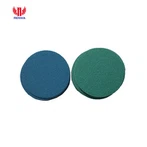
When grinding defective metal surfaces, a common problem is that visible marks or imperfections, such as cracks, scratches, or pores, remain after processing.
Strictly speaking, this does not always mean these defects existed in the original material. In many cases, unsuitable abrasive grain selection or an improper grinding method can enlarge or deepen existing defects instead of removing them effectively.
What Surface Defects Can Be Caused by Improper Abrasive Grain Selection?
Deep scratches or dents caused by grinding tools
This issue often occurs when using rigid grinding discs for heavy stock removal. Excessive pressure or an incorrect grinding angle can create deep grooves or dents on the workpiece surface, making later finishing more difficult.
Heat discoloration
Materials with low thermal conductivity, such as stainless steel, are highly sensitive to heat. If an unsuitable abrasive product is used or grinding stays in one area for too long, excessive heat may cause discoloration and even affect the properties of the processed area.
Exposed hidden pores
Cast components often contain internal pores, especially near the surface. These pores are formed during casting and may become stress concentration points during service.
When removing surface pores, deeper hidden pores may appear after grinding. This is not caused by the grinding process itself but by defects inside the material that require additional stock removal.
Excessive pits caused by overly fine abrasive grain
Using an abrasive grain that is too fine during surface refinement may sometimes produce poor results. Instead of completely removing defects, fine grains can polish over them and leave small cavities beneath the surface, which may later become potential corrosion or cracking points.
Plow marks caused by overly rigid grinding tools
Highly rigid tools may leave deep and narrow grinding marks on the surface. Overlapping tool paths can create uneven profiles, making it difficult to achieve a smooth finish.
To prevent larger defects and improve grinding efficiency, three key factors should be considered when selecting abrasive products.
1. Choosing the Right Product Format
Abrasive products are commonly available as abrasive belts and grinding discs. For removing defects on metal sheets, grinding discs are more frequently used. Common options include:
Hard Grinding Discs
Hard grinding discs are depressed-center discs with ceramic particles distributed in a bonding system. Their rigid structure provides strong cutting ability but may also create stronger vibration during operation.
If the operator lacks experience, the original defects may remain or become worse. A contact angle of approximately 30°–45° is usually recommended.
Fiber Sanding Discs
Fiber sanding discs are widely used because they provide high stock removal, good flexibility, easy handling, and reliable finishing performance.
Their structure combines vulcanized fiber backing, bonding materials, and abrasive grain, creating a flexible grinding system that adapts well to different surface conditions. A contact angle of around 10°–20° is recommended.
Flap Discs
Flap discs are made from multiple abrasive cloth flaps attached to a rigid backing, usually fiberglass. They provide good vibration absorption, easier control, and smoother grinding performance.
Compared with traditional discs, flap discs create fewer deep scratches, but their cutting efficiency is generally lower. Excessive pressure may damage the bonding system and accelerate wear.
2. Selecting the Proper Abrasive Grain Type
Different materials require different abrasive grain characteristics. Hardness and toughness are the main factors that determine the correct choice.

For carbon steel and stainless steel, aluminum oxide abrasive grain is commonly selected due to its balanced cutting performance and durability. For copper, brass, aluminum alloys, titanium alloys, and other non-ferrous materials, zirconia abrasive grain is often a better choice.

For demanding grinding applications, products may also use silicon carbide, cubic boron nitride, or diamond abrasive grain to achieve higher performance on special materials such as high-strength steel and nickel-based alloys.
Ceramic Abrasive Grain Advantages
Ceramic abrasive grain has a unique microcrystalline structure that allows controlled fracture during grinding. This continuously exposes fresh cutting edges and maintains sharp cutting performance.

Its main advantages include:
Faster material removal on stainless steel and high-temperature alloys.
Lower grinding temperature and longer service life.
Reduced heat accumulation through self-lubricating coatings.
Better performance on materials with poor thermal conductivity.
3. Controlling Grinding Temperature and Grit Size
Excessive heat is one of the main causes of surface discoloration and damage. Therefore, selecting the correct abrasive grain and grit size is essential for achieving stable grinding results.

A lower grit number provides stronger cutting ability but produces a rougher surface finish. For most applications, starting with grit sizes between 20 and 40 is recommended for defect removal, followed by medium or fine grits to improve surface quality.
Besides grit size, abrasive distribution density and backing hardness also affect grinding performance. Lower grain density allows each abrasive grain to carry more pressure, while harder backings may increase vibration and reduce surface quality.
In conclusion, successful grinding depends on finding the right balance between product type, abrasive grain selection, and grit size. Choosing the correct abrasive grain not only helps remove defects efficiently but also improves surface quality, reduces rework, and extends tool life.