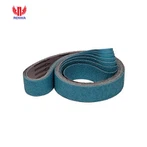
Silicon carbide (SiC) is a high-hardness synthetic abrasive with a Mohs hardness of up to 9.5, ranking just below diamond and cubic boron nitride (CBN). It is particularly well suited for grinding hard and brittle materials such as cemented carbide, ceramics, and glass, as well as low-strength metals such as aluminum and copper. Among the different types of silicon carbide, black silicon carbide and green silicon carbide are the two most widely used. However, they differ significantly in composition, key properties, and suitable applications. The following sections compare the two abrasives in terms of hardness, toughness, thermal conductivity, and other important factors, while providing practical guidance for abrasive selection.
A Detailed Comparison of Black Silicon Carbide and Green Silicon Carbide
1. Composition and Manufacturing Process
| Feature | Black Silicon Carbide (C) | Green Silicon Carbide (GC) |
|---|---|---|
| Composition | SiC purity is generally 97–98%, with small amounts of impurities such as Fe₂O₃. | SiC purity is above 98%. |
| Manufacturing Process | Quartz sand and petroleum coke are used as the main raw materials and smelted at approximately 2200°C. | Petroleum coke and high-quality silica are used as the main raw materials. Salt is added as an additive, followed by high-temperature smelting in a resistance furnace. |
| Color | Black | Green, with its distinctive optical properties resulting from its high purity. |
Key difference: Green silicon carbide has higher purity and a more complete crystal structure, giving it higher hardness and greater brittleness than black silicon carbide.
2. Detailed Comparison of Physical Properties
| Property | Black Silicon Carbide (C) | Green Silicon Carbide (GC) |
|---|---|---|
| Hardness | 9.2–9.3, slightly lower than green silicon carbide | 9.4–9.5, currently the hardest type of silicon carbide |
| Toughness | Relatively good toughness and better resistance to impact | Lower toughness and more prone to fracture |
| Thermal Conductivity | Relatively high thermal conductivity, allowing heat to dissipate quickly and making it suitable for continuous grinding operations | Relatively low thermal conductivity, so adequate coolant should be used during grinding |
| Self-Sharpening | Moderate self-sharpening; abrasive grains are more likely to fracture during grinding | Excellent self-sharpening, making it suitable for precision grinding applications |
Key Takeaways:
Black silicon carbide: Offers a good balance of hardness and toughness, making it suitable for rough grinding and intermittent grinding operations.
Green silicon carbide: Provides extremely high hardness but is more brittle, making it better suited for precision grinding and the machining of ultra-hard materials.
3. Typical Application Areas
| Material Type | Recommended Silicon Carbide Type | Recommended Reason |
|---|---|---|
| Cast Iron, Copper, Aluminum | Black Silicon Carbide (C) | Its sufficient toughness helps prevent excessive abrasive grain breakage while offering good cost efficiency. |
| Cemented Carbide (YG) | Green Silicon Carbide (GC) | Its higher hardness effectively cuts WC-Co cemented carbide and helps reduce abrasive grain adhesion. |
| Ceramics, Glass | Green Silicon Carbide (GC) | The sharp, high-purity abrasive grains provide efficient cutting while helping reduce damage to the workpiece during grinding. |
| Rubber, Plastics | Black Silicon Carbide (C) + Air-Cooled Grinding Wheel | The relatively open abrasive structure helps prevent clogging, while the lower material cost provides better overall economy. |
How Should You Select the Right Silicon Carbide Grinding Wheel?
When to Choose Black Silicon Carbide (C):
For low-strength metals:
Black silicon carbide is a preferred choice for grinding materials such as aluminum, copper, and cast iron.
For heavy-duty rough grinding:
When the application requires better toughness or when cost is an important consideration, black silicon carbide is a practical choice for heavy stock removal and rough grinding operations.
When to Choose Green Silicon Carbide (GC):
For precision grinding of ultra-hard materials:
Green silicon carbide is recommended for finishing cemented carbide, ceramics, gemstones, and other hard materials.
For high surface-finish requirements:
Green silicon carbide is better suited to applications requiring a very fine surface finish, such as polishing optical glass.
Selection Considerations:
Coolant use:
Green silicon carbide is more prone to thermal cracking, so an adequate supply of coolant is recommended during grinding.
Grit selection:
For rough grinding, 36#–80# grit is generally recommended, while 100#–W40 grit is more suitable for precision grinding.