Knives are frequently used in our daily lives; for example, we need a sharp knife for cutting vegetables and chopping meat. We often see chefs sharpening their knives before cutting things for better performance, and this is where whetstones come in handy. So, which is better for segment and sharpening stones: diamond abrasive or white aluminum oxide?
Knives become dull with prolonged use, so they need to be sharpened regularly to maintain their edge. Good knives can cost hundreds or even thousands of dollars; without sharpening, even a high-end powder steel knife will lose its luster.
The use of a whetstone is a crucial step in sharpening. Whetstones on the market include white aluminum oxide, diamond, silicon carbide, and brown aluminum oxide. So, which type of segment and sharpening stone is best?
1. White Fused Alumina segment and sharpening stone
Choosing a segment and sharpening stone is actually quite easy. A double-sided whetstone with a suitable grit size can meet the needs of most households. Coarse grits are typically 240# to 400#, while fine grits are 800# to 1000#. A 1000# whetstone can easily sharpen a blade for shaving; there's no need to pursue higher grits, as excessive sharpness can be dangerous.
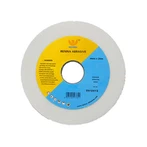
Many segment and sharpening stones are sold online. Brown fused alumina, white fused alumina, and pink fused alumina whetstones are all suitable and durable. White fused alumina is particularly popular in households due to its pure white color, high purity, good crystal structure, high bulk density, excellent self-sharpening properties, strong grinding ability, low heat generation, high efficiency, resistance to acid and alkali corrosion, high temperature resistance, and good thermal stability.
2. Diamond segment and sharpening stone
Diamond segment and sharpening stones are fine-grained whetstones, slow to grind metal, and are typically used for sharpening large knives.
Sharpening kitchen knives should also involve coarse and fine grinding processes; coarse grinding uses a sandstone wheel with diamond (or brown aluminum oxide) grinding powder; then fine grinding uses a silicon carbide wheel. This separation of coarse and fine grinding is preferable.
Each has its advantages and disadvantages. If a softer, finer grind is needed, silicon carbide is preferable. If a large-scale sharpening is required and a smooth finish is not necessary, diamond segment and sharpening stones are more effective, but they also tend to produce more abrasive particles.