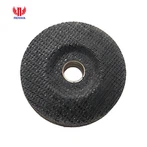
There are two main methods for balancing centerless grinding wheels: static balancing and dynamic balancing. The following are the specific operation methods:
Centerless grinding wheel static balance adjustment method:
1. Preparation
Prepare tools such as a balancing stand, balancing spindle, balancing weights, and a level. Ensure the balancing stand is level, especially longitudinally.
Clean the grinding wheel surface to remove cutting fluid, dust, and other impurities to prevent them from affecting balancing.
2. Installing the Centerless Grinding Wheel
Insert the balancing spindle into the tapered sleeve of the grinding wheel chuck and secure the nut to ensure a tight connection between the grinding wheel and the spindle.
Place the installed grinding wheel and chuck on the balancing stand, allowing the wheel to rotate freely.
3. Adjusting the Balancing Weight
Installate the balancing weight in the annular groove of the grinding wheel chuck. Adjust the position of the balancing weight so that the center of gravity of the grinding wheel aligns with the axis of rotation.
Specific Procedure:
Find the heaviest point (i.e., the center of gravity) when the grinding wheel is rotating and mark it as point A.
Install the balancing weight at a position corresponding to the same diameter as point A, ensuring that the grinding wheel remains balanced at this position.
If the grinding wheel is still unbalanced, add or adjust balancing weights at other locations until the wheel remains stable in all positions.
4. Repeat Calibration
After installation on the machine, use a dresser to round the grinding wheel. Then, place the grinding wheel back on the balancing stand and calibrate it again to ensure balance.
Centerless grinding wheel dynamic balance adjustment method:
Dynamic balancing requires measurement and adjustment using a professional dynamic balancer. The specific steps are as follows:
1. Installing the Dynamic Balancer
Install the dynamic balancer's sensor at a specific location on the centerless grinding wheel, usually on the end or side of the wheel, ensuring good contact between the sensor and the wheel surface.
Connect the dynamic balancer's power supply and measurement circuits, start the instrument, and perform initialization settings.
2. Measuring Unbalance
Start the grinding wheel and run it at its rated speed. The dynamic balancer will automatically measure the wheel's imbalance and display the magnitude and direction of the imbalance.
3. Adjusting the Balancing Weights
Based on the dynamic balancer's measurement results, add or adjust balancing weights to the grinding wheel. The position and weight of the balancing weights should be precisely adjusted based on the measurement results to eliminate the wheel's imbalance.
4. Remeasure and Recalibrate
After adjusting the balancing weights, start the grinding wheel again and measure with the dynamic balancer. Repeat the balancing weight adjustment process until the wheel's imbalance is within the acceptable range.
Precautions:
1. Before installing a new grinding wheel, inspect it for cracks, scratches, or other defects. If any are present, do not use it. 2. When installing the grinding wheel, place a paper pad or oil-resistant rubber pad at least 1 mm thick between the grinding wheel and the chuck to evenly distribute pressure.
3. Do not overtighten the hexagon socket head cap screws to avoid cracking the grinding wheel.
4. After balancing, tighten the balance block to prevent it from loosening during operation.
Through the above methods, the balance of the centerless grinding wheel can be effectively adjusted, vibration can be reduced, and processing accuracy and stability can be improved.