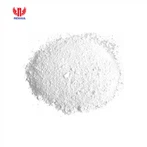
If the impurity content in calcined alumina is to be reduced and the purity of calcined alumina is to be improved, methods such as heating medium filtration and addition of complexing agents are required. How is calcined alumina made? It is obtained by calcining industrial alumina powder at high temperature above 1300 °C. During calcination, the difference in temperature will affect the performance characteristics of the product itself.
So what effect does the calcination temperature have on the properties of calcined alumina?
1. To improve the stability of the product, it is necessary to prolong the holding time, which is an important part of controlling the characteristics and performance of the product. The longer the holding time, the more stable the product performance.
2. The hardness, high temperature resistance and shrinkage of calcined alumina are related to calcination stability, and the higher the calcination temperature, the higher the numerical value of these factors. When calcined alumina is used as a raw material for ceramics and refractories, the calcination temperature should be controlled at about 1400°C, and the holding time should be controlled at more than 10 hours.
To sum up, the characteristics and performance of calcined alumina will be affected by the calcination temperature and holding time. Therefore, on the basis of mastering the calcination method, enterprises should control the calcination temperature and holding time to ensure that the performance of calcined alumina is better excellent.
However, it is worth noting that the higher the calcination temperature, the higher the processing cost. Therefore, manufacturers can choose the appropriate calcination temperature according to the processing environment and the specific use of the product.