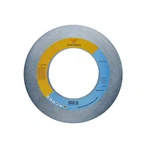
White corundum is made of high-quality alumina powder. High-temperature calcined alumina powder is different from white corundum in terms of processing technology and results. So what is the difference between white corundum and calcined alumina powder?

High-temperature calcined alumina micropowder is made by roasting at 1300-1400 ℃ in a rotary kiln. It has high temperature resistance and wear resistance, so it is mostly used in refractory materials and ceramics industry. White corundum is made by smelting at a high temperature of more than 2000 degrees in an arc and then cooling down. After crushing and shaping, magnetic separation to remove iron, and sieving into various particle sizes, white corundum has dense crystals, high hardness and sharp angles, so it is suitable for the manufacture of ceramics. , mold abrasive, polishing, sandblasting, etc., can also be used to manufacture refractory materials. It is very important abrasive.
 |  |
Compared with high temperature calcined alumina micropowder, the processing difficulty is low, and the processing cost is also low, so it is widely used in the refractory and ceramic industries. Reduce production costs while meeting customer needs. Finely produced calcined alumina powder can also be used in electronic vacuum tube shells, spark plugs and other electronic ceramics, sealing rings, textile machinery and other wear-resistant ceramics, alumina crucibles, ceramic tubes and other high-temperature materials, high-frequency insulating ceramics, LCD substrate glass, etc.
It can be seen that alumina powder and white corundum have their own characteristics.