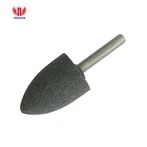
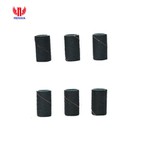
The packing density of white aluminum oxide abrasive plays a crucial role in the production of abrasive tools. It refers to the mass (weight) of the abrasive material per unit volume when the particles are naturally compacted. This property is a direct reflection of the physical characteristics of white corundum, including specific gravity, particle shape, and particle size distribution.
Packing density significantly impacts the molding performance of abrasive tools, the strength of the finished products, and their porosity. It also affects the overall grinding performance, including factors such as grinding life and sharpness.
Several key factors influence the packing density of white aluminum oxide abrasives:
1. Control of Particle Size Distribution
Properly managing the particle size distribution is essential. Adjusting the balance between basic particles, mixed particles, coarse, and fine particles is important for achieving the desired packing density.
2. Selection of Suitable Sand Making Process
Choosing the right sand making process ensures that the grain shape of the white aluminum oxide abrasives is as optimal as possible. Proper grain shape contributes to better packing density.
3. Shaping Process to Improve Packing Density
Shaping the abrasive particles can improve their packing density by making the particles more rounded and reducing the voids between them. However, not all white aluminum oxide abrasive products require a high packing density. It is important to select white aluminum oxide abrasives based on the specific requirements of the production process.
In conclusion, while increasing packing density can enhance the performance of certain abrasive tools, it is crucial to select the right white aluminum oxide abrasives and processing methods to meet the specific needs of each application.