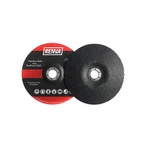
In the precision machining of gears, gear grinding is one of the methods for machining high-precision gears with fine surface finish. Gears ground using this method can achieve accuracy levels of 7-4. While gear grinding has disadvantages such as expensive equipment, low production efficiency, high demands on operator skill, and high production costs, it still offers many advantages compared to other gear finishing methods (such as gear shaving and gear honing).
The main advantages of gear grinding include: the machining accuracy of gear shaving and honing is highly dependent on the accuracy of the pre-machined gear, and they have limited ability to correct certain errors in the pre-machined gear. Gear shaving also cannot process hardened gears, while gear grinding can process hardened gears, correct various errors in the pre-machined gear, eliminate deformation caused by heat treatment, and achieve higher accuracy than gear shaving and honing.
The equipment used for gear grinding requires the selection of appropriate gear grinding wheels to ensure the quality and accuracy of the grinding process.
I. Selection of Gear Grinding Wheels
1. Abrasive material:
When the gear being ground is made of general-grade hardened alloy steel or high-speed steel, the abrasive material should be white fused alumina (WA), pink fused alumina (PA), or a mixture of white fused alumina and pink fused alumina.
2. Hardness:
The higher the hardness of the gear being ground, the softer the grinding wheel should be. When grinding gears with a form grinding wheel, because the contact area of the grinding wheel is large and prone to burning, a slightly softer grinding wheel should be used. However, to maintain the shape accuracy of the grinding wheel, it should not be too soft. During dry grinding, due to poor heat dissipation, the hardness of the grinding wheel should also be on the softer side.
3. Grit Size:
The grit size should be selected to ensure the required tooth surface accuracy and surface roughness of the gear being ground. The higher the requirements for tooth surface accuracy and surface roughness, the finer the grit size should be.
4. Bonding Agent:
Generally, a stable ceramic bonding agent is preferred. For high-speed grinding, a special ceramic bonding agent suitable for high-speed grinding should be used.
When selecting the above parameters, comprehensive consideration should be given to factors such as the accuracy requirements of the gear being ground, productivity, and the grinding machine. Furthermore, when the gear requires high accuracy and surface finish, and the grinding allowance is relatively large, it is best to choose gear grinding wheels with different hardness and grit sizes for rough and finish grinding respectively.
II. Balancing of gear grinding wheels
Gear grinding is a precision machining process, and the balance of the grinding wheel is particularly important. Otherwise, vibrations will occur during grinding, affecting the surface roughness and accuracy of the ground gear teeth, and in severe cases, even affecting the service life of the gear grinding machine.
The grinding wheel must undergo two static balancing procedures. After the first static balancing, the grinding wheel is roughly dressed, and then a second static balancing is performed, followed by fine dressing. For worm grinding wheels, due to their large size and weight, dynamic balancing is also necessary to ensure good accuracy and surface roughness of the ground gears. Currently, most CNC gear grinding machines are equipped with automatic dynamic balancing systems on the grinding wheel spindle, but careful static balancing twice is still required.
If the new gear grinding wheel requires a significant amount of dressing, it should be roughly shaped on the grinding machine before static balancing.