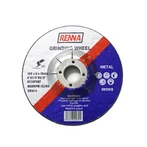
Abrasive grain and grinding tools are a collective term for both abrasives and grinding tools, encompassing both abrasive products and grinding tool products. Abrasives and grinding tools are often referred to as the "teeth of industry." In grinding, abrasives or grinding tools are commonly used as grinding tools to machine parts to achieve certain technical requirements.
What is abrasive grain wear?
Abrasive wear is a wear phenomenon caused by the transfer of material between one or both surfaces during friction when one surface comes into contact with another and relative motion occurs.
Mechanism of abrasive grain wear
When abrasive particles move relative to the surface of a workpiece, the forces acting on the abrasive can be decomposed into components perpendicular to the surface and components parallel to the surface.
1. The component perpendicular to the surface causes the abrasive to embed into the surface. For materials with good plasticity, this produces numerous dense indentations. Repeated action leads to fatigue and failure. For brittle materials, brittle failure occurs without surface deformation.
2. The component parallel to the surface causes the abrasive to move tangentially, resulting in scratching and cutting grooves on the surface. For plastic materials, abrasive cutting will cut a single chip from the friction surface.
For brittle materials, a single abrasive cut will remove many fragments from the surface.
Abrasive wear occurs at very high speeds and is a major form of damage to many mechanical devices.
Main factors affecting abrasive grain wear
The Influence of Abrasive Grain Size on Wear
The wear of metals increases with the increase of abrasive size. However, once the abrasive size reaches a certain level, the wear rate remains constant.
The Influence of Abrasive Geometry on Wear Rate
Abrasives with sharp edges wear faster than smooth abrasives. As the abrasive becomes dull, the wear rate decreases. If the abrasive is broken down, the wear rate increases again.
The Influence of Abrasive Hardness on Wear Rate
1. When the abrasive hardness is lower than the part hardness, the wear rate is related to the hardness difference between the two. A larger difference leads to a slower wear rate.
2. When the abrasive hardness is slightly higher than the part hardness, wear is more severe. A smaller hardness difference results in less wear.
Therefore, using surface strengthening methods to make the part hardness reach or exceed the abrasive hardness can improve the wear resistance of the part. However, high hardness materials can lead to decreased toughness and increased brittleness.
The Influence of Pressure on Wear
For abrasive wear, the wear rate is directly proportional to the pressure. For parts made of the same material, reducing the pressure by half doubles the lifespan.
Measures to reduce abrasive grain wear
Reduce the entry of abrasives
For example, install various filters, add dustproof sealing devices, install magnets, chip collection chambers and oil contamination level indicators, and regularly clean and replace air, fuel and oil filters.
Enhance the wear resistance of parts
Improve the material properties of parts through heat treatment and surface treatment methods, increase surface hardness, and make the surface hardness exceed the hardness of the abrasive as much as possible.
Select materials with good wear resistance
Using medium carbon steel for quenching and low-temperature tempering to obtain martensitic steel can give the parts both wear resistance and good toughness.