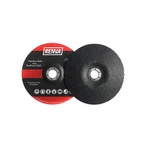
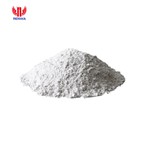
Black silicon carbide has been widely used in refractory materials, chemicals, abrasives, electrical engineering and other industries. It has good thermal conductivity and stability. In order to make full use of these characteristics, it must be stored correctly. The safety operating procedures should be strictly followed during the use of black silicon carbide, and it should be replaced in time after a period of use.
Notes on replacement of black silicon carbide:
1. Texture problem
During use, if cracks are found in some parts of the product, stop using it immediately and replace it with a new one to avoid breaking and injuring people.
2. Wear problem
Any black silicon carbide has certain wear requirements for use. If the wear reaches a certain level, it must be replaced with a new one. It cannot be used beyond the wear requirements in order to save materials. This is an extremely unsafe violation. Generally speaking, when the diameter is worn to be 10mm larger than the chuck diameter, it should be replaced with a new one.
3. Validity period problem
The new black silicon carbide taken out from the warehouse may not be qualified, and even the one bought from the manufacturer may not be qualified. Any product has a certain validity period. If it is used within the validity period, it is qualified; if it is used beyond the validity period, it may not be qualified.
Correct storage of black silicon carbide:
1. If the packaging is damaged during transportation, it is best to store it separately to avoid dust pollution (we can replace the damaged packaging).
2. Black silicon carbide has strong hygroscopicity, so try to avoid removing the moisture-proof film when storing it; this can prevent it from getting wet and shorten the drying time.
3. To ensure orderly storage, materials with the same batch number should be placed in rows to avoid mistakes during the material retrieval process.
4. It is recommended that the warehouse be closed and stored separately.
5. Use materials on a first-in-first-out basis whenever possible to prevent raw materials from clumping due to long-term storage.