Ⅰ. The Real Cost of a Cutting Wheel
In manufacturing, time is money. Choosing a cutting wheel based solely on its purchase price often overlooks several hidden costs that can have a much greater impact on overall productivity and profitability.
The total cost of a cutting operation typically includes:
Purchase Cost – The upfront price of the cutting disc.
Labor Cost – The time spent cutting as well as the time required for wheel changes. In many operations, labor is the largest cost factor.
Wheel Life – The number of cuts a wheel can perform before replacement.
Operator Technique – Proper usage affects both productivity and safety.
When evaluating cut off wheel performance, it is important to look beyond the unit price. Factors such as cost per cut, cutting speed, and replacement frequency often have a much greater influence on total operating costs.
In many cases, fast-cut off wheels tend to wear out more quickly, while longer-lasting wheels may cut at a slower rate. The most cost-effective solution is usually the one that provides the best balance between cutting speed and wheel life for the specific application.
Ⅱ. Key Factors That Affect Performance and Wheel Life
Several factors can significantly influence cutting efficiency, wheel longevity, and overall production costs.
Wheel Too Soft for the Material
If the wheel wears down too quickly, fewer cuts can be achieved per wheel, increasing the cost of each cut.
Wheel Too Hard for the Material
A harder wheel may last longer, but slower cutting speeds can increase labor costs and reduce productivity.
Frequent Wheel Changes
Excessive wheel replacement creates workflow interruptions and reduces productive operating time.
Excessive Cutting Pressure
Applying too much pressure is one of the most common causes of cutting-related accidents. It can also:
Generate excessive heat
Reduce wheel life
Cause material distortion, especially on aluminum
Damage grinder motors
Increase maintenance and downtime costs
Excessive Burr Formation
Some cutting wheels create more friction during operation, resulting in larger burrs that require additional deburring work and increase labor costs.
Poor Cutting Accuracy
Inaccurate cuts can negatively affect fit-up before welding, potentially increasing filler metal consumption and overall welding costs.
Ⅲ. How to Select the Right Cutting Wheel
Before choosing a cutting wheel, it is helpful to identify your primary production objectives. Are you trying to increase throughput, reduce welding preparation time, lower consumable costs, or improve workplace safety?
A systematic evaluation of operations with high cutting volumes, high consumable usage, or recurring safety concerns can reveal opportunities for significant improvements.
The following technical factors should be considered when selecting a cutting disc.
Workpiece Material
Material compatibility is one of the most important selection criteria.
For aluminum, choose cut off wheels designed to resist loading and clogging.
For titanium, Inconel, armor steel, and high-nickel alloys, ceramic abrasive cutting discs are often the best choice due to their superior cutting performance and durability.
Using the wrong wheel for the material can lead to substantial losses in both time and operating costs.
Cutting Wheel Type
Type 1 Cutting Wheels
Flat profile design
Allows deeper cuts
Commonly used for precision cutting applications
Type 27 Cutting Wheels
Depressed-center design
Better suited for restricted-angle operations
Provides additional clearance around the hub area
Wheel Diameter
In North America, 4.5-inch and 6-inch cutting wheels are among the most common sizes.
A 6-inch wheel generally delivers:
More cuts per wheel
Greater cutting depth
Better access to confined areas
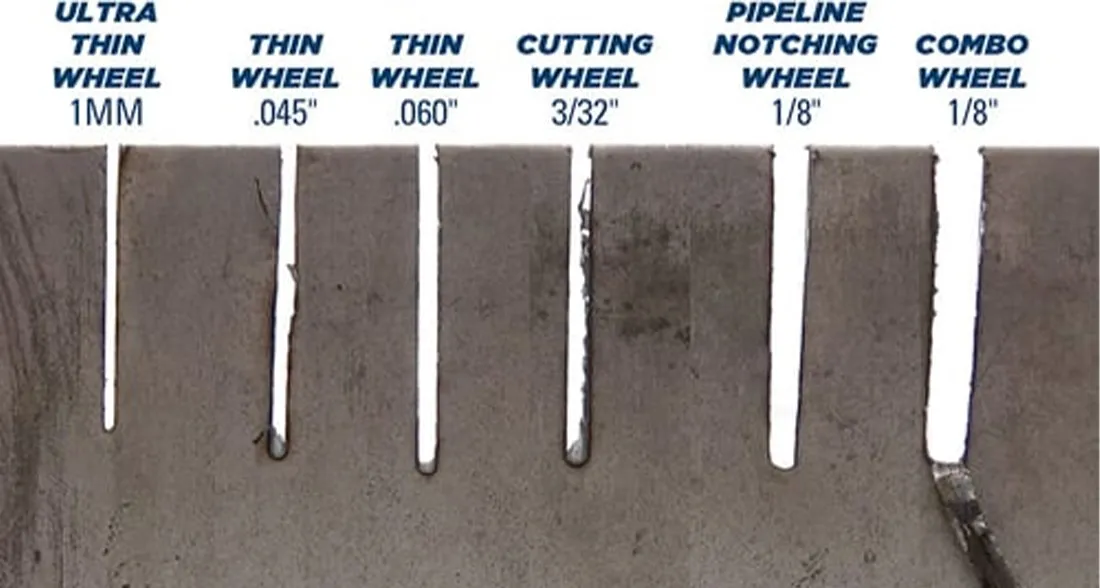
Wheel Thickness
Wheel thickness directly affects cutting speed, precision, and material removal.
For sheet metal and thin materials, 0.045-inch (1.14 mm) wheels or ultra-thin 1 mm cutting discs are often preferred because they:
Cut faster
Generate less friction and heat
Produce fewer burrs
Minimize material loss
For applications requiring both cutting and light grinding, 1/8-inch (3.2 mm) combination wheels offer greater versatility.
Abrasive Grain, Grit Size, and Bonding System
Abrasive Types
Common abrasive materials include:
Aluminum Oxide
Silicon Carbide
Zirconia Alumina
Ceramic Alumina
The optimal abrasive depends on the material being cut and the desired performance characteristics.
Grit Size
Grit size influences cutting aggressiveness and surface finish. Coarser grits typically cut faster, while finer grits provide smoother results.
Bonding System
The bond determines wheel hardness and wear characteristics.
Hard Bonds
Longer wheel life
Suitable for softer materials
Soft Bonds
Release abrasive grains more quickly
Deliver faster cutting action
Typically wear faster
Tool Compatibility
Most cutting wheels are used with angle grinders. The grinder must have sufficient power and current capacity to maintain the wheel's rated operating speed.
An underpowered tool may reduce cutting efficiency, shorten wheel life, and prevent the wheel from performing as designed.
|
Factor |
Key Considerations |
Impact on Performance |
Impact on Cost & Safety |
|
Cutting Thickness |
Thin type (e.g., 0.045 inch) vs. thick type |
Thin wheels cut faster with lower power consumption; thick wheels are more durable |
Better cutting efficiency; reduced labor cost and lower safety risks |
|
Abrasive Type |
Abrasive material and quality (e.g., alumina, ceramic abrasives, etc.) |
Higher-quality abrasives provide greater cutting efficiency and longer service life |
Higher initial investment but lower overall cost |
|
Bond Type |
Bonding method of abrasive grains |
Stronger bonding improves durability; poor bonding can affect cutting efficiency |
Balanced bonding reduces wheel breakage and improves safety |
|
Cutting Wheel Diameter |
Relationship between wheel diameter and workpiece size |
Larger diameters allow deeper cuts and improve efficiency |
Suitable for larger workpieces and increases production safety |
|
Tool Compatibility |
Compatibility between the wheel and the cutting machine |
Ensures optimal cutting performance |
Incorrect matching may cause wheel damage, accidents, or production stoppages |
|
Application Material |
Steel, stainless steel, aluminum, cast iron, etc. |
Different materials require different abrasive formulations |
Proper matching improves cutting efficiency and reduces waste |
|
Operating Pressure |
Pressure applied during cutting |
Excessive pressure reduces wheel life and increases wear |
Higher risk of accidents and increased unit production costs |
Ⅳ. The Impact of Cutting Wheel Selection on Safety
Choosing the correct cutting wheel is not only a productivity issue-it is also a critical safety consideration.
Proper wheel selection can help:
Reduce vibration
Lower the risk of wheel breakage
Ensure compatibility with tool operating speeds
Improve overall operator control
In addition, operators should receive training on the safe use of the specific cutting discs used in their facility.
Essential Safety Practices
Always use cut off wheels rated for the grinder's operating speed.
Never exceed the maximum RPM specified by the wheel manufacturer.
Avoid excessive cutting pressure.
Inspect wheels regularly before use.
Do not use wheels that are damaged, contaminated, moisture-exposed, or past their expiration date.
By selecting the right cutting wheel and following proper operating procedures, manufacturers can improve productivity, reduce total operating costs, and create a safer working environment.