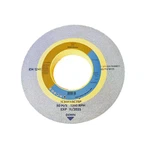
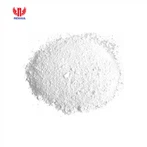
Abrasive grain is the material that makes up the grinding tool. It is a material with a very hard and sharp surface, used to grind the surface of workpieces with lower hardness. Abrasives are divided into two categories: natural abrasives and artificial abrasives. Each category includes many different subcategories. Different abrasives have different particle sizes and hardness. When using them, they should be selected according to the properties of the workpiece material, such as hardness, tensile strength, toughness, etc., as well as the precision requirements of processing.
1. General principles for abrasive grain selection
Generally speaking, when grinding workpiece materials with higher hardness, abrasive grain with high hardness should be selected. For example, when grinding hardened steel, alloy steel, high-speed steel, tool steel, etc., white aluminum oxide abrasives with higher hardness should be used; when grinding workpiece materials with high tensile strength, abrasives with strong toughness should be selected. For example, when grinding carbon steel, cast iron alloy steel, hard bronze, etc., brown aluminum oxide abrasives with strong toughness should be used; when grinding materials with low tensile strength, brittle or strong silicon carbide abrasives should be selected. For example, grinding non-ferrous metals, rubber, leather, plastics, etc. is suitable for black silicon carbide as abrasive, while grinding cemented carbide, optical glass, ceramic materials, etc. is suitable for green silicon carbide as abrasive; SG and CBN vitrified grinding tools are widely used for difficult-to-grind materials.
In addition, in order to give full play to the advantages of various abrasive grain in grinding and maximize the grinding efficiency, mixed abrasives have also been widely used. For example, the grinding wheels for crankshaft grinding and spherical bearing inner and outer ring grinding are made by combining the white aluminum oxide with the brown aluminum oxide with high toughness mentioned above to make a mixed abrasive, which has the advantages of both. During grinding, the high toughness of brown corundum can be brought into play, while the certain brittleness and good thermal conductivity of white aluminum oxide can also be brought into play. Similarly, the coarse grinding of cobalt-based alloy gear teeth can be made of a mixture of single crystal and microcrystalline abrasives; the grinding wheel for aluminum high-speed steel is made of a mixture of brown aluminum oxide and green silicon carbide.

2. Principles for selecting abrasive grain size
The grain size is a parameter that describes the roughness of the abrasive surface. The larger the value of the grain size number, the smaller the abrasive particles and the smaller the roughness. When selecting the grain size of the abrasive, it should be mainly based on the requirements of processing accuracy, workpiece surface roughness and grinding efficiency.
Generally speaking, if the workpiece to be ground needs to have a higher roughness, then coarse-grained abrasives should be selected; conversely, if the workpiece surface roughness is required to be lower, then fine-grained abrasives should be selected.
If the workpiece has high requirements for geometric accuracy, then the contact area between the grinding wheel and the workpiece is also a factor that needs to be considered. When the contact area is small, fine grains should be selected; when the contact area is large, coarse grains should be selected.
When the workpiece requires both high geometric accuracy and low surface roughness, mixed-grained abrasives should be selected.
If the workpiece material is hard and brittle, it is not suitable to use coarse-grained abrasives, but fine-grained abrasives should be selected; conversely, if the material is hard and tough, coarse-grained abrasives should be selected.
If the workpiece has poor thermal conductivity, is prone to heat and deformation, or is prone to burns, then a coarser abrasive should be selected.
3. Principles for selecting abrasive tool hardness
The hardness of the grinding tool refers to the difficulty of the abrasive grains in the abrasive to fall off during the grinding operation. The harder the grinding tool, the less likely the abrasives will fall off. The hardness of the grinding tool can generally be divided into seven levels: super soft, soft, medium soft, medium, medium hard, hard and super hard. Each level can be further divided into several small levels.
In addition to the type of abrasive that makes up the grinding wheel, the hardness of the grinding tool also depends on the amount of binder added and the density of the abrasive. The harder the grinding tool, the better, because the abrasive grains in the abrasive will be blunt sooner or later, and if the abrasives happen to fall off at this time, the grinding tool can continue to perform grinding operations with sharp abrasives. From this point of view, whether the grinding tool is not hard enough, resulting in the abrasives falling off too early, or the grinding tool is too hard, resulting in the abrasives falling off too late, it is not an ideal result. When choosing the hardness of the grinding tool, the following principles are generally followed:
When grinding harder materials, since the abrasives are more likely to be blunted, in order to make the blunted abrasive grains fall off in time, a grinding tool with a smaller hardness should be selected; on the contrary, when grinding softer materials, the abrasives are not easy to be blunted. In order to extend the service life of the grinding tool as much as possible, a grinding tool with a larger hardness should be selected.
But this is not absolute. If the grinding workpiece is not only soft but also has greater toughness, such as non-ferrous metals such as copper and aluminum, such materials are prone to cause blockage of the grinding tool. To avoid this situation, a grinding tool with a smaller hardness should be selected.
In addition, the rotation speed of the grinding wheel and the contact area with the workpiece are also factors that need to be considered. When the grinding wheel linear speed is low and the contact area with the workpiece is small, it is suitable to choose a grinding tool with a larger hardness; when the grinding wheel linear speed is high and the contact area with the workpiece is large, it is suitable to choose a grinding tool with a smaller hardness.
For workpieces with poor thermal conductivity, easy deformation, and easy burning, the huge heat generated during grinding, especially dry grinding, is not good for the workpiece. Abrasives with lower hardness should be selected. On the one hand, the heat generated is lower, and on the other hand, part of the heat can be taken away by the shedding of abrasive particles.
Finally, when there are high requirements for grinding efficiency, abrasives with lower hardness can be selected; when the requirements for roughness are lower, abrasives with higher hardness can be selected.