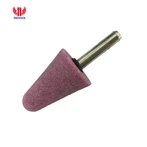
The main differences between rubber grinding wheels and resinoid grinding wheels are as follows:
I. Types of binders
Rubber grinding wheels: These use rubber as a binder and are typically made from natural or synthetic rubber as the main raw material.
Resinoid grinding wheels: These use resin as a binder. Commonly used resin types include phenolic resin, epoxy resin, and polyurethane.
II. Physical Properties
Rubber grinding wheels:
High elasticity: Suitable for fine polishing, reducing surface scratches.
Weak cutting force: Polishing relies mainly on the friction of rubber, resulting in insufficient cutting force.
Good heat resistance: Rubber materials retain certain properties even at high temperatures.
Resinoid grinding wheels:
High strength: Suitable for high-speed cutting and heavy-duty grinding.
Good elasticity: Beneficial for improving workpiece surface finish.
Poor heat resistance: Prone to carbonization at high temperatures, affecting durability.
III. Application Areas
Rubber grinding wheels:
Primarily used for tool polishing, precision machining, and other applications requiring high surface finish.
The advantage lies in providing good cutting force and surface finish during polishing, making them suitable for workpieces with extremely high surface quality requirements.
Resinoid grinding wheels:
Widely used in metal processing, stone cutting, precision machining, and other fields.
Particularly suitable for high-speed, high-load grinding operations, such as cutting discs, double-faced grinding wheels, heavy-duty grinding wheels, and polishing wheels.
IV. Manufacturing Process and Storage
Rubber grinding wheels:
In the manufacturing process, rubber-bonded grinding wheels have small pores and few voids, resulting in a dense structure and good shape retention. However, the rubber bond has poor heat, oil, and moisture resistance, limiting the shelf life of these grinding wheels to two years.
Resinoid grinding wheels:
Manufacturing processes include cold pressing and hot pressing. Resin bonds have poor heat resistance, and alkaline cutting fluids accelerate wear. Humid environments also reduce the strength of the grinding wheels. Therefore, resin-bonded grinding wheels should generally not be stored for more than one year.
In summary, rubber grinding wheels and resinoid grinding wheels differ significantly in terms of bond type, physical properties, application areas, manufacturing processes, and storage. The choice of which grinding wheel to use depends on specific processing requirements and workpiece specifications.