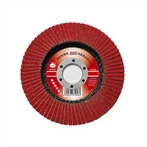
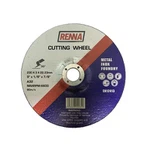
Are your abrasive flap discs tearing or not giving you the right finish? There might be some things your flap discs are trying to tell you. Here are some tips on increasing the life of your metal flap discs and getting the best performance.
There's a few options out there and choosing the right one will ensure you get the most out of your flap disc. If you're finding your discs are wearing out too fast, or not giving you the right finish, you could be selecting the wrong disc for your application.
Choosing the right flap disc
-FLAT SHAPE
The best choice for weld removal, blending and smooth finishing. Use primarily on flat surfaces.

-CONICAL SHAPE
The best choice for aggressive stock removal. Used on both contoured and edge work.

-Application and grit

-Right application - wrong angle
Flap discs are designed to be worked on an angle. The angle depends on your fabrication and what you are grinding, however a general guide would be between 5-10 degrees from flat/level. If the angle is too flat then too many of the disc's grains will be connecting with the metal at once, causing the flap disc to wear a lot faster. If the angle is too high you won't be using enough of the disc. This will result in excessive wearing on only part of the disc, and insufficient sanding of the job.
Tip: Adjust your angles. The way to tell if your angles are off is to look at the wear pattern on your sanding discs. Generally the wear pattern on your disc face should be approximately double the disc thickness. So if your flap disc is 6mm thick, then a 12mm wide wear pattern should be visible on the face. If the wear pattern is wider then it indicates your approach is too flat. If the wear pattern is thinner your approach is too high.
Pushing too hard on your fabrication will overwork and overheat your flap disc.This will cause the disc to wear out much faster, and reduce the effectiveness of the abrasive. At the same time, if not enough pressure is used the disc will not be engaging with the metal enough to efficiently sand back the surface. This will result in longer sanding times and further wearing.