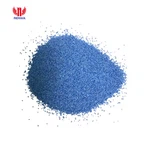
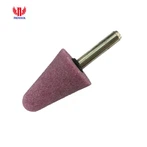
In precision grinding, choosing between bonded abrasives and coated abrasives is a common question on the shop floor. Both remove material, but their structures and performance are quite different.
In one workshop comparison, bonded abrasives delivered twice the dimensional consistency of coated abrasives during finish grinding. After measuring 100 workpieces, the difference became clear. Here is what the test showed and what it means for abrasive selection.
1. What Are Bonded and Coated Abrasives?
Bonded abrasives are made by holding abrasive grains together with a bond, such as resin, vitrified material, or metal. They form rigid tools with fixed shapes, including grinding wheels, mounted points, and honing stones. The grains are firmly held in the bond and do not move freely.
Coated abrasives are made by bonding abrasive grains to a flexible backing, such as paper, cloth, or film. Common products include sandpaper, abrasive belts, and abrasive cloth. Their flexible backing allows them to follow curved and irregular surfaces.
In simple terms, bonded abrasives are rigid, while coated abrasives are flexible.
2. Why Is Dimensional Consistency Different in Finish Grinding?
In a workshop comparison, a resin-bonded grinding wheel and an abrasive belt were used to finish-grind the same hardened steel workpiece. The dimensions of 100 finished parts were measured.
The results were:
Bonded abrasive: dimensional tolerance of ±0.005 mm.
Coated abrasive: dimensional tolerance of ±0.01 mm.
The difference was twofold.
The main reason is tool rigidity. A grinding wheel maintains a relatively fixed shape and position during operation. Its cutting depth is mainly controlled by wheel positioning and machine settings. Once properly set up, it can produce consistent dimensions across a batch.
An abrasive belt is more flexible. Its deformation depends on contact pressure, belt tension, and workpiece geometry. Even small changes in pressure can affect the actual cutting depth, causing dimensional variation.
Abrasive wear also plays a role. A grinding wheel contains multiple layers of abrasive grains and can be dressed to expose fresh cutting edges. This helps maintain stable cutting performance. An abrasive belt generally has a single abrasive layer. As its grains become dull, cutting efficiency drops and grinding forces may increase.
These structural differences help explain why bonded abrasives often provide better dimensional control in precision grinding. However, actual results also depend on machine accuracy, dressing conditions, abrasive selection, and process control.
3. Advantages of Bonded Abrasives
Beyond dimensional consistency, bonded abrasives offer several benefits:
High precision:
Their rigidity makes them suitable for tight-tolerance grinding, including applications requiring tolerances of ±0.002 mm or better under suitable conditions.
High stock removal:
Multiple abrasive layers allow relatively large infeed and efficient material removal.
Longer service life:
Grinding wheels can be dressed and reused, extending their working life.
Flexible tool design:
They can be manufactured in different shapes and profiles for surface, cylindrical, internal, and form grinding.
4. Advantages of Coated Abrasives
Coated abrasives also have strengths that make them valuable in many applications.
Flexibility:
Their backing adapts to curved surfaces and irregular profiles, making them suitable for manual sanding and contour finishing.
Lower grinding temperatures:
Sharp abrasive grains and good chip clearance can help reduce heat buildup, particularly when finishing heat-sensitive materials such as aluminum, copper, and stainless steel.
Lower initial cost:
Sandpaper and abrasive belts are generally less expensive to purchase than industrial grinding wheels.
Easy operation:
They can be used with simple power tools or by hand, without always requiring a dedicated grinding machine.
5. Which Abrasive Should You Choose for Finish Grinding?
For tight tolerances and consistent batch production, bonded abrasives are generally the preferred option. They are widely used for bearings, cutting tools, and precision components.
For heavy stock removal, where productivity matters more than fine dimensional control, grinding wheels are also an effective choice.
Coated abrasives are better suited to curved or irregular surfaces, manual finishing, and applications where flexibility and lower grinding temperatures are important. They are also practical for small batches, prototypes, and cost-sensitive jobs.
The right choice depends on dimensional requirements, workpiece geometry, material properties, production volume, and surface finish targets.
6. Combining Both Abrasive Types in Production
In practice, manufacturers do not always need to choose just one. Combining bonded and coated abrasives can deliver a good balance of productivity and surface quality.
For example, when finishing stainless steel tubes, the process may start with turning, leaving 0.2 mm of material for grinding. A grinding wheel then reduces the allowance to 0.02 mm, followed by abrasive belt finishing to achieve a surface roughness of Ra 0.4 μm.
A similar approach is common in mold manufacturing. Grinding wheels handle rough and semi-finish machining to establish accurate dimensions, while abrasive cloth is used for manual polishing to remove surface marks.
The principle is simple: grinding wheels focus on dimensional accuracy, while flexible abrasives refine the surface finish. Each has a distinct role, and neither needs to replace the other.
Bonded abrasives and coated abrasives serve different purposes. For precision grinding and consistent dimensions, rigid grinding wheels are generally the better choice. For contour sanding, flexible finishing, and cost-sensitive work, coated products offer greater adaptability.
The best results often come from selecting the right abrasive for each stage of production. In short, use rigid tools to control dimensions and flexible abrasives to refine the surface.