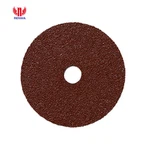
Grinding is a common metal cutting method, which can achieve high processing accuracy and surface quality. However, during the process, the abrasive tool may wear, clog, and change in grinding force. In order to overcome these problems and improve the efficiency and quality of grinding, the technology of grinding using abrasive belts came into being.
Grinding belt is a processing method that uses flexible abrasive tools to grind the workpiece surface efficiently, at low temperature, and elastically. Usually there are diamond belts, ceramic abrasive belts, zirconium corundum belts, corundum belts, stacked belts, etc.
Among them, ceramic abrasive belts are a high-efficiency grinding material made of nano-scale aluminum oxide or silicon carbide. They have high hardness, high toughness, high wear resistance and high cutting force. They can effectively grind high-hardness, high-strength, and high-toughness metal materials, such as stainless steel, titanium alloy, nickel-based alloy, etc., as well as various metal and non-metal surface treatments, such as removing burrs, grinding welds, polishing, trimming shapes, etc. The abrasive particles of ceramic abrasive belts have the characteristics of self-sharpening, that is, during the grinding process, the edges of the abrasive particles will continue to break to form new cutting surfaces, thereby maintaining grinding efficiency and surface quality and extending the service life of the belt.
The surface of the ceramic abrasive belt has been specially treated to have anti-static, anti-clogging, waterproof, and oil-proof functions. It can effectively prevent the adhesion of the grinding material, improve the cleanliness and cooling effect of the abrasive belt, and reduce thermal deformation and burns during the grinding process.
Compared with other abrasive belts, it has higher grinding performance, longer service life, wider application range and better environmental protection. It will not cause pollution when processing parts or products, reduce dust, and improve the working environment. It is an efficient, energy-saving and environmentally friendly grinding material.
To choose a suitable ceramic abrasive belt, the following factors need to be considered: the basic structural elements of the abrasive belt, including the matrix, binder, abrasive and structural form. Different structural elements will affect the performance, durability and application range of the abrasive belt.