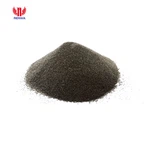
Steel grit is one of the most commonly used abrasives in industrial machinery, and it is made of scrap steel. But do you know how to check the quality of steel grit? Here, we are going to introduce some testing standards to you.
1, Hardness. If the steel grit is too soft, it will slow down the cleaning speed and reduce the work efficiency. When in sand blasting, the too soft steel grit cannot produce suitable residual stress. In addition, the action forces of softer steel grit applied on surface cannot be compensated by increasing the time of impact.
However, higher hardness is not necessarily better. Too hard steel sand will cause unsatisfactory surface morphology, and increase the probability of sand breakage, which will increase the consumption, wear on equipment, and costs of equipment maintenance, so the appropriate hardness is also critical.
2, Microstructure. The microstructure of steel grit must be resistant to deformation. In addition, the amount of brittle carbide in microstructure must to be reduced, otherwise, the steel grit will be broken prematurely.
3, Chemical composition. The chemical composition will determine the microstructure of the steel grit and the effect of subsequent heat treatment. The carbon content should be moderate. Silicon, manganese can improve the strength and hardness of steel sand, so the content of them should be as high as possible. Sulfur, phosphorus is harmful elements, which is easy to increase the brittleness of steel sand and lead to premature breaking of sand, so the content should be as low as possible.
4, Fatigue life. Fatigue life is the ability of sand to resist crushing when applied to the working surface. Abrasive with the longest fatigue life will be the most economical abrasive if it can convert the appropriate energy into cleaning.