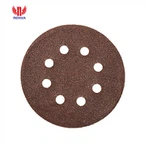
In the grinding industry, sandpaper is widely used, and sandpaper can be divided into dry sandpaper, waterproof sandpaper, and sponge sandpaper. What they all have in common is the use of adhesives to bond different abrasives and sandpaper substrates together.
Waterproof sandpaper is made of a water-resistant substrate or a water-resistant substrate as a substrate, with synthetic resin or varnish as a binder, and aluminum oxide or silicon carbide bonded to the substrate. Because waterproof sandpaper can be soaked in water for grinding, waterproof sandpaper is also called water-resistant sandpaper or water sandpaper.

The gap between the sand grains of the waterproof sandpaper is small, and the debris generated by the waterproof sandpaper and the workpiece is not easy to clean up when used alone, so it needs to be used together with water to make the debris flow out with the water, so that the surface of the sandpaper can be kept clean to achieve a fine grinding effect. And waterproof sandpaper is suitable for post-processing. Dry sanding paper does not seem to be so troublesome, because the gap between the dry sanding paper and the workpiece is relatively large, and the debris from the grinding between the dry sanding paper and the workpiece will fall due to the gap during the grinding process, but dry sanding paper is generally suitable for coarse grinding.
At the same time, waterproof sandpaper is generally sanded under water-containing conditions, so there is less dust and better working conditions. Although dry sanding paper has the characteristics of anti-clogging, anti-static, good flexibility, and high wear resistance, it has heavy dust pollution, and it is necessary to wear appropriate protective facilities during operation (However, in the face of the strong function of dry sandpaper, it is also acceptable).