In the large family of metallographic consumables, there are many with the same functions and consumables, such as metallographic sandpaper and diamond grinding disc. Both consumables are used for rough grinding of samples. Many times, our new friends are a little confused. These two have the same functions, so how should I choose?
In the preparation process of metallographic samples, in addition to cutting and inlaying, the most critical step is probably the grinding and polishing process. If the cutting does not produce deep, irremovable defects, and the inlaying is also reasonable, then the key lies in the grasp of the grinding and polishing process. In the case of proficient sample preparation technology, the quality of sample preparation depends on whether the consumables selected for each grinding and polishing process are appropriate. As both metallographic sandpaper and diamond grinding disc are used for rough grinding, there are still differences in their application. Understanding these differences can make appropriate choices.
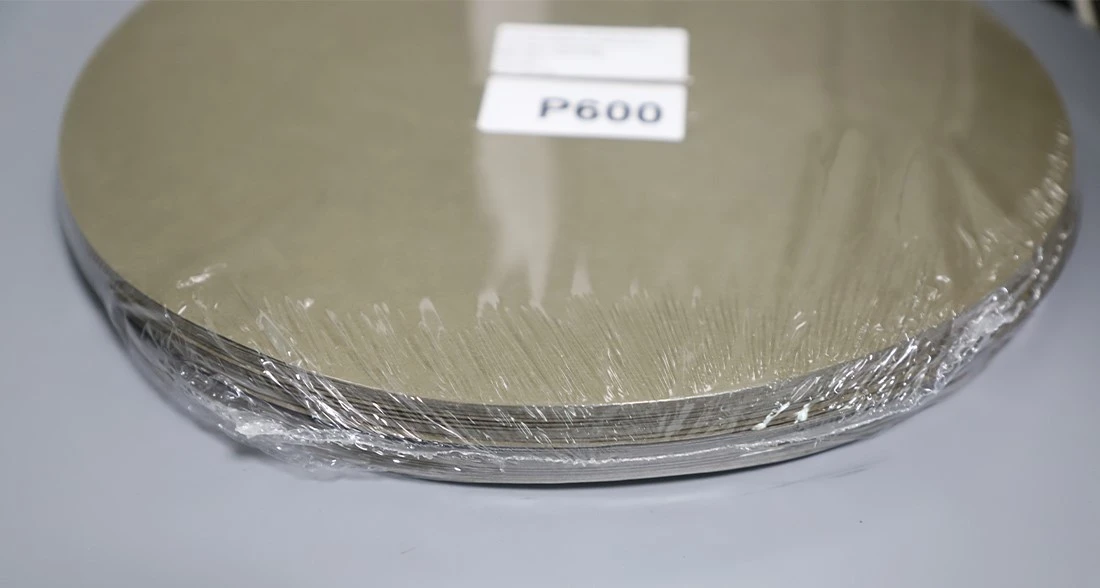
Diamond grinding disc, with diamond abrasive particles and a particle size ranging from 240μm to 6μm, is particularly suitable for the preparation of samples of high hardness or superhard materials such as ceramics, glass, thermal spray metal coatings, and cemented carbide with a hardness higher than 150HV. One diamond grinding disc can replace at least 100-200 sheets of silicon carbide metallographic sandpaper. This is when the advantages of diamond grinding discs can be reflected. Usually, when using diamond grinding discs for rough grinding, unlike using metallographic abrasive paper, at least 2 to 3 grades of metallographic sandpaper grinding processes are required. One step is enough, with the same high removal rate, wear resistance, and a long service life with good grinding performance. Samples with perfect edge retention and flatness can be easily obtained! This is the application feature of diamond grinding discs.
Silicon carbide metallographic sandpaper, the abrasive particles are silicon carbide particles, the particle size ranges from 260μm-5μm. For materials with a hardness lower than 150HV or slightly harder materials with good ductility, the use of silicon carbide metallographic abrasive paper for rough grinding is still the most appropriate choice. It can quickly remove materials and obtain a uniform surface finish.
In summary, the application of metallographic sandpaper in rough grinding depends on the hardness of the material compared with diamond grinding disc. Diamond grinding disc is suitable for the preparation of material samples with a hardness range of more than 150HV, while metallographic sandpaper is best used for the preparation of material samples with a hardness range of less than 150HV, or material samples with high hardness but good ductility.