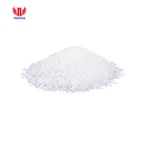
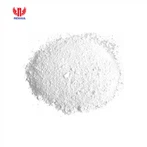
Industrial glass beads are widely used in surface treatment, material modification, coatings, and composite manufacturing. With their smooth spherical structure, chemical stability, wear resistance, and lightweight properties, they provide practical solutions for improving product performance and processing efficiency.
Glass Beads for Surface Treatment and Sandblasting
In precision surface finishing, solid glass beads are commonly used as blasting abrasives. Compared with traditional abrasives with sharp edges, their rounded shape provides a softer and more controlled treatment effect.
During sandblasting, they can effectively remove rust, oxide layers, and surface contaminants without causing excessive damage to the base material. They also help improve surface appearance and reduce residual stress, making them suitable for molds, precision components, medical equipment, and aerospace parts.
Glass Beads for Material Filling and Modification
In plastics, rubber, artificial stone, and composite materials, glass beads work as functional fillers to improve material performance. Their lightweight characteristics help reduce product weight while enhancing hardness, wear resistance, and dimensional stability.
They can also reduce shrinkage and deformation during production, making finished products more durable and reliable. This makes them useful in automotive parts, electronic housings, decorative panels, and other industrial applications.
Hollow Glass Beads for Insulation and Lightweight Materials
Hollow glass beads feature a sealed internal structure that provides excellent thermal insulation performance. When added to coatings, building materials, and protective layers, they help reduce heat transfer and improve energy efficiency.
In lightweight composite materials, they can reduce overall weight while maintaining good mechanical strength. They are widely used in aerospace components, marine materials, sports equipment, and other high-performance products.
Common Problems in Using Glass Beads
Selecting the correct type and specification is important for achieving the desired results. Solid beads are mainly used for surface treatment, while hollow beads are more suitable for insulation and lightweight applications.
Particle size and addition ratio also affect final performance. Incorrect selection may cause uneven processing, reduced material strength, or poor insulation effects. In addition, proper storage is necessary to prevent moisture absorption and particle agglomeration.
How to Select the Right Glass Beads
The choice should be based on the specific application requirements. For metal cleaning and surface finishing, high-strength solid glass beads are recommended. For thermal insulation coatings and lightweight composites, hollow types are usually a better option.
By selecting the right material type, particle size, and processing method, manufacturers can improve product quality, reduce material waste, and achieve more stable production results.