The fused corundum used for refractory materials is generally white corundum, sub-white corundum and brown corundum. It is mainly made by melting alumina or bauxite as raw material. The main differences between sintered tabular corundum and fused corundum are as follows:
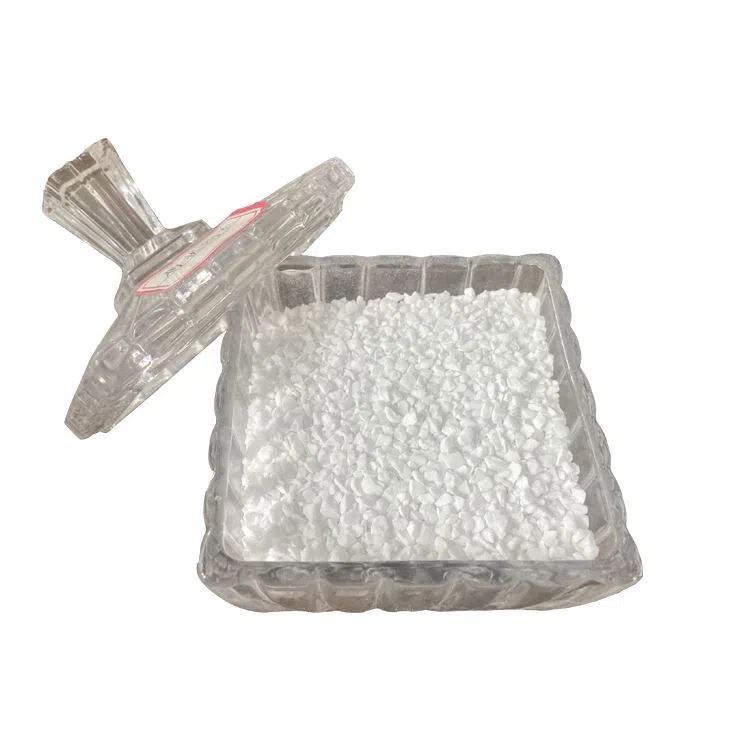


1. The impurity content of sintered tabular corundum is low and the distribution is uniform, and the impurity content of fused corundum is high and the distribution is uneven.
Sintered tabular corundum is made of high-purity industrial alumina. No additives are added during the production process. Except for the entry of a small amount of mechanical iron in the crushing process (the iron can be removed by a magnetic separator), other impurities such as iron, silicon and sodium are for trace amounts.
In the production process of fused corundum, iron and carbon need to be added as additives. Iron, carbon, silicon, sodium? The impurity content is much higher than that of sintered tabular corundum. At the same time, due to the different cooling speeds of different parts during the cooling of the fused corundum molten block, the impurity content of different parts is different. Therefore, fused corundum emphasizes strict selection, while sintered tabular corundum does not need to be selected.
2. The thermal shock resistance and spalling resistance of sintered tabular corundum are better than those of fused corundum.
Sintered tabular corundum has good thermal shock resistance and spalling resistance because it has a number of closed pores. The spherical closed pores can effectively resist thermal shock and prevent the propagation of cracks.
Fused corundum has more open pores and less closed pores, and it forms single crystals with larger sizes during the slow cooling process. These single crystals produce microcracks during the crushing process, thereby reducing thermal shock resistance and anti-stripping performance.
3. The production process of sintered tabular corundum is far more energy-saving and environmentally friendly than fused corundum.
The production of fused corundum is a well-known high energy consumer. The power consumption of fused corundum per ton is 2300-3300 degrees, while the comprehensive energy consumption of sintered tabular corundum is only one-seventh to one-tenth of fused corundum.
A large amount of waste gas and waste residue are emitted during the production of fused corundum, while the production of sintered tabular corundum uses natural gas as the heat source. Except for the emission of carbon dioxide in natural gas, there is no other waste gas and waste residue.