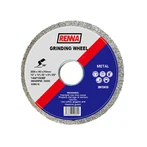
Q: What is abrasive grain?
A: Abrasive grain refers to the abrasive material used in grinding, cutting, polishing, and other abrasive processes. These materials are often made of natural or synthetic minerals, such as aluminum oxide, silicon carbide, diamond, and cubic boron nitride.
Q: How is abrasive grain made?
A: The process of making abrasive grain varies depending on the material. For example, aluminum oxide abrasive grains are made by fusing bauxite ore with electricity and then grinding it into the desired size. Silicon carbide abrasive grains are made by heating a mixture of silica sand and carbon in a furnace. Diamond abrasive grains are made by converting graphite into diamond using high pressure and high temperature. Cubic boron nitride abrasive grains are made by synthesizing boron nitride under high pressure and high temperature.
Q: What are the advantages of using abrasive grain in the grinding industry?
A: Abrasive grain offers several advantages in the grinding industry. It is hard, durable, and can be used to cut and shape a wide range of materials, including metal, wood, and ceramics. It can also be used to polish and refine surfaces to a high degree of accuracy and smoothness. Additionally, abrasive grain can be customized to suit specific grinding applications, allowing for greater precision and efficiency.
Q: What grinding applications are best suited for abrasive grain?
A: Abrasive grain is well-suited to a wide range of grinding applications, including surface grinding, cylindrical grinding, centerless grinding, and tool grinding. It can be used on materials ranging from soft metals like aluminum to hard metals like steel and titanium, as well as nonmetallic materials like ceramics and composites.
Q: How do I select the right abrasive grain for my grinding application?
A: The selection of abrasive grain depends on several factors, including the type of material being ground, the desired surface finish, and the grinding machine being used. Harder abrasive grains like diamond and cubic boron nitride are best suited for grinding hard metals and ceramics, while softer materials like aluminum oxide and silicon carbide are better for grinding softer metals. Additionally, grain size, shape, and bonding can all affect the performance of the abrasive grain in a given application.
Q: How can I optimize the performance of my abrasive grain?
A: To optimize the performance of abrasive grain, it is important to follow best practices for grinding operations. This includes selecting the appropriate grinding machine, using the correct grinding wheel and coolant, maintaining proper speeds and feeds, and regularly checking and replacing worn or damaged abrasive grains. Additionally, training and educating operators on proper grinding techniques can help ensure optimal performance and longevity of abrasive grain.