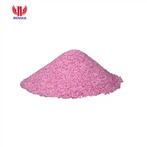
Selecting Walnut Shell Sandblasting Media: Focus on Grit Size, Hardness, and Shape
Walnut shell sandblasting media is widely used in dry tumbling because of its moderate hardness and good toughness. It can help remove minor surface defects without scratching the workpiece when the correct grade is selected. The abrasive should be matched to the workpiece size and required surface finish to avoid using particles that are too coarse, which may cause scratches, or too fine, which may reduce processing efficiency.
1. Choose According to Grit Size (Particle Size)
Grit size is measured in mesh. The higher the mesh number, the finer the particles. The appropriate grade depends on the initial surface condition of the workpiece and the desired result.
|
Processing Stage |
Initial Workpiece Condition (e.g., Surface Roughness Ra) |
Recommended Mesh Size |
Main Effect |
Typical Applications |
|---|---|---|---|---|
|
Coarse tumbling (deburring) |
Ra 10–50 μm; oxide scale and sharp edges present |
6–12 mesh |
Strong cutting action for rapid burr and oxide-scale removal |
Initial processing of castings and stamped parts |
|
Medium tumbling (defect removal) |
Ra 5–10 μm; minor scratches or roughness |
20–40 mesh |
Balances material removal and polishing to eliminate minor defects |
Intermediate finishing of hardware and plastic parts |
|
Fine tumbling (polishing) |
Ra 1–5 μm; improved gloss required |
40–80 mesh |
Lower cutting action, mainly for improving surface smoothness |
Final polishing of precision components and decorative parts |
|
Ultra-fine tumbling (mirror finishing) |
Ra below 1 μm; mirror-like finish required |
80–100 mesh |
Minimal cutting action, primarily for enhancing surface brightness |
Mirror finishing of jewelry and electronic components |
2. Choose According to Hardness: Aim for 2.5–3.0 on the Mohs Scale
The hardness of the abrasive should be appropriate for the workpiece material to minimize the risk of scratching.
For softer materials: For aluminum, plastics, and other materials with a hardness below approximately 2.5 Mohs, choose softer walnut shell sandblasting media with a hardness around 2.5 Mohs. Untreated walnut shells may be suitable, depending on their condition and grade.
For harder materials: For steel, ceramics, and other materials with a hardness above 5 Mohs, choose harder walnut shell media with a hardness closer to 3.0 Mohs, such as properly degreased and dried shells, to maintain effective cutting action and improve processing efficiency.
A simple hardness check: Softer shells tend to crush under light pressure, while harder shells require more force to break. This is only a rough screening method; consistent production requires appropriate material specifications and testing.
3. Choose According to Particle Shape: Irregular Granules Are Preferred
The shape of walnut shell particles affects their contact area with the workpiece and the consistency of material removal.
Recommended: Irregularly crushed particles with natural edges that are not excessively sharp. They provide more consistent contact with the workpiece and can deliver stable deburring and polishing results.
Use with caution: Rounded or spherical particles generally have less aggressive cutting action. They may be suitable for gentle finishing but can be inefficient for applications that require significant burr removal.
4. Other Important Specifications
Impurity content: Keep impurities, such as dust and fine shell powder, below 3% where possible. Excessive contamination can accumulate on the workpiece and leave dark marks. Screening the media with a sieve corresponding to the required mesh size before use can help remove unwanted fines and oversized particles.
Moisture content: A moisture content below 5% is recommended. Excess moisture can cause the media to clump, resulting in uneven tumbling. When metal parts and processing compounds are involved, poor moisture control may also contribute to corrosion or microbial growth in the process mixture.
Degreasing: For precision or contamination-sensitive components, such as electronic parts, choose degreased walnut shell media to minimize oil residue on the workpiece. For general-purpose applications, untreated media may be a more economical option if its natural oil content does not affect the process.
Common Pitfalls: Three Key Precautions
1. Conduct a Small-Batch Trial First
Before starting full-scale production, test approximately 1–2 kg of walnut shell sandblasting media with 50–100 mL of tumbling compound and three to five workpieces. Run the test for 10–30 minutes, then inspect the parts for scratches and check whether the required gloss has been achieved.
Adjust the mesh size, compound dosage, and processing time according to the results before moving to batch production.
2. Control the Amount of Tumbling Compound
As a starting point, use approximately 1%–3% tumbling compound by weight of the walnut shell media. For example, 100 kg of media would require around 1–3 kg of compound.
Too much compound can cause the media to stick together, reducing effective contact with the workpieces and weakening the cutting action. Too little can increase dry friction, leading to scratches and faster media wear.
The appropriate amount depends on the compound formulation, workpiece material, and equipment, so confirm the dosage through testing.
3. Reuse Walnut Shell Media Properly
High-quality walnut shell sandblasting media may be reused three to five times, depending on the workpiece material, contamination level, and processing conditions. Add approximately 5%–10% fresh media per cycle as needed to compensate for losses and maintain consistent performance.
If the workpieces contain oil or grease, clean the media before reuse and dry it thoroughly with warm air. This helps prevent contamination from accumulating and affecting subsequent batches.
Summary: A Step-by-Step Selection Process
Define the requirements: Identify the workpiece material (metal or non-metal), the processing goal (deburring, polishing, or surface preparation), the workpiece size, and the initial surface roughness.
Select the walnut shell media: Choose the processing stage and mesh size first, then check hardness and particle shape. Prioritize irregular particles with low impurity levels and hardness suitable for the workpiece.
Test and optimize: Run a small-batch trial, adjust the process parameters, and then proceed to full-scale production.
By following these steps, manufacturers can achieve efficient dry tumbling with a lower risk of surface damage and better control over operating costs. Selecting the right walnut shell sandblasting media helps reduce unnecessary rework, prevent workpiece rejection, and maintain consistent finishing quality.