Zirconia beads, zirconium silicate, and zirconium-aluminum composite materials are all grinding media, and the market has various names for zirconia beads or similar products. The composition and final chemical structure of the finished beads are explained below according to the international industry standards.


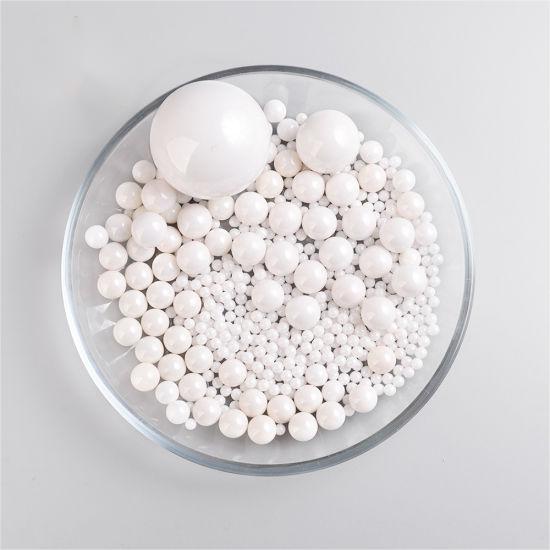
Zirconia beads, also known as "TZP" zirconium beads, are made of micron and sub-nanoscale zirconia and yttrium oxide as raw materials. They are used for ultra-fine grinding of materials requiring "zero pollution" and high viscosity and high hardness. and dispersion of a kind of grinding beads. The molecular formula of zirconia is ZrO2, and pure zirconia mainly exists in three forms, monoclinic (m-ZrO2), tetragonal (t-ZrO2), and tetragonal (c-ZrO2).
These three forms can be transformed into each other at different temperatures, and exist in a monoclinic system below 1300 °C. The monoclinic crystal system is very unstable under the action of external force due to the structure of the unit cell itself; the lattice structures of the tetragonal crystal system and the tetragonal crystal system are quite stable.
Zirconium silicate can be regarded as a composite oxide, which is composed of silicon oxide and zirconium oxide in the same molar ratio, and the molecular formula is ZrSiO4. The specific gravity is about 4.0kg/dm3, and the Vickers hardness is about 1000kgf/mm2. Zirconium silicate beads are commonly used because of their medium density and hardness, excellent wear resistance and cheaper price than zirconia beads.


According to the bead phasing process, it is divided into two types: sintering and electrofusion. The sintered beads made of zircon sand as raw materials are reflected in a consistent microstructure. The latter is formed by melting and mixing zirconia powder and silica powder. The microstructure is zirconia crystals and silica glass bodies. At the same time, it is also a defect of this process that the cavity beads cannot be avoided.
Due to historical reasons, many people mistakenly call zirconium silicate beads zirconia beads, and call them zirconium beads for short; of course, some people call zirconia beads zirconium beads for short, and confusion arises.
In fact, both zirconium silicate beads and zirconia beads are high-quality grinding media, which are widely used in industrial production. Zirconia beads are mainly used for ultra-fine grinding and dispersion of materials requiring "zero pollution" and high viscosity and high hardness, such as: electronic ceramics, magnetic materials, zirconia, silicon oxide, zirconium silicate, titanium dioxide, pharmaceutical food, pigments , dyes, inks, special chemical industries. Zirconium silicate beads are used in ink, flexo ink, inkjet, color paste, electronic materials, medicine, coatings, paints and other chemical industries.
The similarities in the application field of the two make it difficult for customers to purchase. Which of the two beads is better and which is more cost-effective. Now let's compare and differentiate from the following aspects.
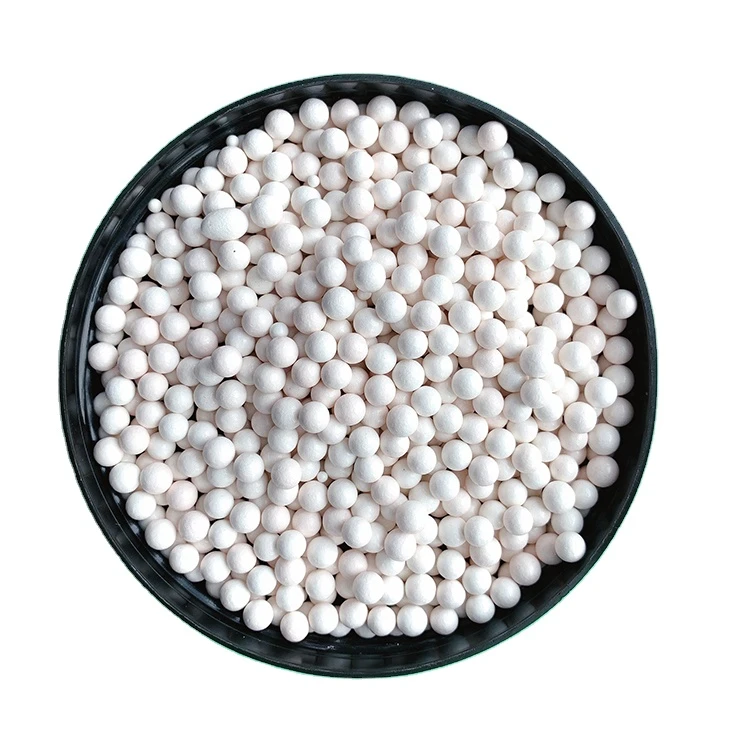

1. Differences in appearance and performance, zirconium silicate is generally yellow-white, not bright, and opaque. Zirconium silicate beads are made of zirconium silicate powder, the price is relatively low, the color is light yellow, and the zirconium oxide beads are white and made of zirconium oxide powder. Zirconia beads have higher performance than zirconium silicate beads and lower abrasion than zirconium silicate beads.
2. Hardness: There is no difference in the hardness of these two beads, both are Mohs 9, which is no problem when grinding most materials.
3. Density: The density of zirconium silicate beads is 4.0, and the density of zirconia beads is 6.0. For example, 95 zirconia beads refer to zirconium beads containing about 95% of zirconium, the specific gravity is 6.0g/cm3, and the bulk density is in the specific gravity. Multiplied by 0.6 on the basis, it is 3.6g/cm3, which means that 3.6 tons of zirconium beads can be placed in one cubic volume. The bulk density of 95 zirconia beads is relatively large compared to other ceramic balls, such as alumina balls, zirconium aluminum balls, zirconium silicate balls, etc. The larger the bulk density, the more beads are put into the sand mill or ball mill, and the higher the grinding efficiency. Because of the density, the grinding efficiency of zirconia beads is better than that of zirconium silicate beads, but because of the high density, it is not suitable for some sand mills, such as vertical sand mills. At this time, zirconium silicate beads are still recommended.
4. Scope of application: Zirconium silicate beads are mainly used in vertical sand mills with low rotation speed, because their toughness is not as good as that of zirconia beads, and the beads are easily broken during high-speed grinding. Zirconia will not have such a problem, so it is generally used in horizontal sand mills.
5. Price: This should be a concern for everyone. The price of zirconium silicate beads is generally around 50 yuan per kilogram (subject to the specific price), while the price of zirconia beads is as high as 160 yuan (subject to the specific price) , which also makes the cost performance of zirconium silicate beads much higher than that of zirconia beads.