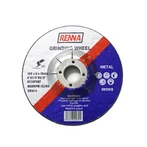
(1) Wheel speed. The grinding wheel speed for grinding high-temperature alloys should generally be around (20~25) m/s. According to
The information should be below 20m/s to reduce the adhesion of the grinding wheel and reduce the grinding temperature. The speed of the cubic boron nitride grinding wheel is (30~35) m/s.
(2) Workpiece speed. The workpiece speed has a great influence on the grinding burn. For high-temperature alloys with high toughness and low thermal conductivity, the workpiece speed should be appropriately increased to reduce and overcome the burn phenomenon. However, the workpiece speed should not be too high, otherwise it will cause self-excited vibration. When the outer and inner circles are ground, the workpiece speed is about 30 m/min. The table speed during surface grinding is (25 to 28) m/min for rough grinding and (15 to 25) m/min for fine grinding.
(3) Feeding amount. Its size has a large influence on the surface roughness of the grinding. Longitudinal feed during external grinding
The amount is (0.05 to 0.5) Bmm/r, and the value is small when fine grinding. The longitudinal feed amount during internal grinding is (0.1 to 0.3)Bmm/r; the lateral feed amount during plane grinding is (0.4 to 0.6) Bmm/dst.
(4) Grinding depth. The grinding depth during cylindrical grinding is (0.01~0.06) mlTl, and the internal grinding is (0.01 to 0.05) mm, plane grinding is (0.01 to 0.05) mm. Take a large value when rough grinding.
(4) Grinding allowance. The grinding allowance of superalloys should be smaller than that of general grinding materials to reduce the grinding work.