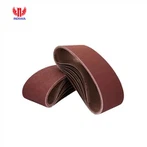
When performing metal polishing, if you want to obtain a high-quality polishing effect, you must have high-quality metal polishing materials such as oilstone, sandpaper, and abrasive paste. It also depends on the surface condition of the polishing tool during processing. So, what should be paid attention to when polishing metal polishing materials with sandpaper? What problems should be paid attention to when polishing materials with sandpaper?

The following points should be paid attention to when polishing materials with sandpaper:
1. When changing to a different type of sandpaper, the polishing direction should be changed by 45°~90°, so that the stripe shadow left by the previous type of sandpaper after polishing can be distinguished. Before changing to a different type of sandpaper, the polishing surface must be carefully wiped with 100% pure cotton dipped in alcohol or other cleaning solution, because a small grain of sand left on the surface will destroy the entire polishing work that follows. This cleaning process is equally important when switching from sandpaper polishing to diamond paste polishing. All particles and kerosene must be completely removed before polishing can proceed.
2. To avoid scratching and burning the workpiece surface, special care must be taken when polishing with #1200 and #1500 sandpaper polishing materials. It is therefore necessary to apply a light load and polish the surface using a two-step polishing method. When polishing with each type of sandpaper, it should be polished twice in two different directions, with each rotation of 45°~90° between the two directions.
3. Polishing with sandpaper requires the use of soft wooden or bamboo sticks. When polishing a round or spherical surface, using a cork stick can better match the curvature of the round and spherical surfaces. Harder woods, like cherry, are more suitable for polishing flat surfaces. Trim the ends of the wooden strips so that they can conform to the shape of the steel surface, so as to avoid deep scratches caused by the sharp angle of the wooden strips (or bamboo strips) touching the steel surface.