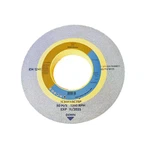
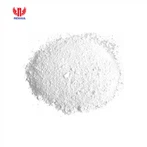
White aluminum oxide is a kind of artificial abrasive, white in color, mainly containing aluminum oxide, and a small amount of iron oxide, silicon oxide and other ingredients. White aluminum oxide has a dense texture, high hardness, and sharp-angled particles. It is suitable for the manufacture of ceramics, resin-bonded abrasives, grinding, polishing, sandblasting, precision casting, etc. White aluminum oxide can also be used to manufacture advanced refractory materials. White aluminum oxide crystals are small in size and impact-resistant. They are crushed by self-grinding machines. Most of the particles are spherical particles. The surface is dry and clean, and it is easy to bind with binders. It is suitable for various high-end products, crafts or hardware products. The surface is white and free of impurities after sandblasting, eliminating the trouble of cleaning.

After continuous technical improvements and industry trials, white aluminum oxide powder has been recognized by customers. White aluminum oxide has high hardness, good self-sharpening, and excellent grinding and polishing performance. At the same time, after technical improvements, the production cost is slightly reduced. In the electric melting process of white aluminum oxide, it becomes complicated due to chemical reactions, homogeneous polycrystalline transformation, recrystallization, and co-solution, but it is mainly achieved by the large surface area and high surface energy of the powder. During the preparation process of the powder, various lattice defects appear on its surface and inside.
White aluminum oxide is made of high-quality aluminum oxide powder as raw material, refined and crystallized by electric melting. It has high purity, good self-sharpening, acid and alkali corrosion resistance, high temperature resistance, and stable thermal performance; its hardness is slightly higher than that of brown corundum, its toughness is slightly lower, its grinding ability is strong, its heat generation is small, and its efficiency is high; it can be made into abrasive tools, which can be used for grinding fine-grained abrasives such as high-carbon steel, high-speed steel and stainless steel, and can also be used for precision casting and advanced refractory materials.