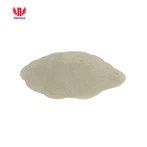
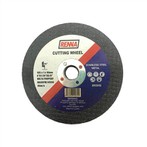
We all know that white aluminum oxide is widely used. The product size is produced according to international standards and national standards, and can be processed according to the user's required size. The general particle size number is F4~F220, and its chemical composition varies depending on the particle size. The outstanding feature is that the crystal size is small and impact-resistant. If it is crushed by a self-grinding machine, the particles are mostly spherical particles with a dry and clean surface, which is easy to bind with a binder.
White aluminum oxide micropowder is made of alumina powder as the main raw material, adapted to chromium oxide, etc., and smelted at high temperature. Pink aluminum oxide is pink, with a hardness similar to that of white aluminum oxide, and a higher toughness than white aluminum oxide.
Grinding tools made of white aluminum oxide have good durability and high grinding finish. It is suitable for precision grinding of measuring tools, machine tool spindles, instrument parts, threaded workpieces and sample grinding.

In the metallurgical industry, chromite is mainly used to produce ferrochrome and metallic chromium. Ferrochrome is used as an additive to steel to produce a variety of high-strength, corrosion-resistant, wear-resistant, high-temperature-resistant and oxidation-resistant special steels, such as stainless steel, acid-resistant steel, heat-resistant steel, ball bearing steel, spring steel, tool steel, etc. Metallic chromium is mainly used to smelt special alloys with elements such as cobalt, nickel, and tungsten. These special steels and special alloys are indispensable materials for aviation, aerospace, automobiles, shipbuilding, and the production of guns, missiles, rockets, and ships in the defense industry. In refractory materials, chromite is used to make chrome bricks, chrome-magnesia bricks and other special refractory materials.
In addition, white aluminum oxide is made from industrial alumina powder, which is melted at a high temperature of more than 2000 degrees in an electric arc and then cooled. It is crushed and shaped, magnetically separated to remove iron, and sieved into various particle sizes. It has a dense texture, high hardness, and sharp-angled particles. It is suitable for the manufacture of ceramics, resin-bonded abrasives, as well as grinding, polishing, sand blasting, precision casting (special corundum for precision casting), etc. It can also be used to manufacture advanced refractory materials.