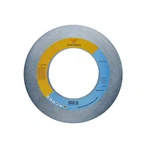
Grinding wheels are made into different shapes and sizes. Due to the differences in abrasives, binders and grinding wheel manufacturing processes, the characteristics of grinding wheels may vary greatly, which has an important impact on the accuracy, roughness and production efficiency of grinding processing. Therefore, it is necessary to select the appropriate grinding wheel according to the specific situation.
The characteristics of the grinding wheel are determined by factors such as abrasive, particle size, hardness, binder, shape and size. Commonly used abrasives include white aluminum oxide, brown aluminum oxide, green silicon carbide, black silicon carbide, etc. Here we mainly introduce the selection of grinding wheel hardness.
The hardness of the grinding wheel refers to the difficulty of the abrasive grains on the surface of the grinding wheel falling off under the action of grinding force. The softer the hardness of the grinding wheel, the easier it is for the abrasive grains to fall off. The harder the hardness of the grinding wheel, the harder it is for the abrasive grains to fall off. Grinding wheel hardness and abrasive hardness are two different concepts. The same abrasive can be made into grinding wheels of different hardness, which mainly depends on the properties and dosage of the binder and the manufacturing process of the grinding wheel. The significant difference between grinding and cutting is that the grinding wheel has the "self-grinding" function. Choosing the hardness of the grinding wheel is actually choosing the self-grinding of the grinding wheel. It is hoped that the abrasive will not fall off or become dull prematurely.
The general principle for selecting the hardness of the white aluminum oxide grinding wheel and brown aluminum oxide grinding wheel is: when processing soft metals, in order to prevent the abrasive from falling off prematurely, a hard wheel should be selected. When processing hard metals, in order to make the blunt surface abrasive fall off in time and expose new abrasives with sharp edges (i.e. self-abrasives), a soft grinding wheel should be selected. The former is because when grinding soft materials, the working abrasive of the white aluminum oxide grinding wheel and brown aluminum oxide grinding wheel wears slowly and does not need to fall off prematurely; the latter is because when grinding hard materials, the working abrasive of the white aluminum oxide grinding wheel and brown aluminum oxide grinding wheel wears faster and needs to be updated quickly. In precision grinding, in order to ensure grinding accuracy and roughness, a slightly harder white aluminum oxide grinding wheel and brown aluminum oxide grinding wheel should be selected. The workpiece material has poor thermal conductivity and is prone to burns and cracks (such as grinding carbide, etc.). The choice of white aluminum oxide grinding wheel and brown aluminum oxide grinding wheel should be soft.