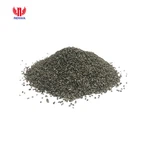
Calcined alumina and sintered fused alumina are two highly related but completely different materials. Simply put, calcined alumina is the main raw material for manufacturing sintered fused alumina, while sintered fused alumina is a superior final product made from this raw material through further processing.
To help you understand this more clearly, you can think of their relationship as "flour" and "baked bread." Below, I will break down their differences in detail from several key dimensions:
| Comparison Dimension | Calcined Alumina | Sintered Fused Alumina |
|---|---|---|
| Core Definition | An intermediate material produced by high-temperature calcination of alumina or aluminum hydroxide, resulting in fine alumina powder. | A high-performance final material produced by shaping and high-temperature sintering fused alumina or calcined alumina powders into dense granular or block structures. |
| Production Process | Low-temperature calcination: Aluminum hydroxide or industrial alumina is heat-treated at 1200–1700°C to complete the crystal phase transformation into α-Al₂O₃. | High-temperature sintering: Fused alumina or calcined alumina powder is finely milled, formed, and sintered at 1750–1900°C, allowing particles to bond together and form a dense microstructure. |
| Product Form | Powder form, with fine particle size, mainly used as a raw material for further processing or functional fillers. | Granular or block form with controlled particle sizes, suitable for direct use as refractory aggregates, advanced abrasives, or ceramic raw materials. |
| Typical Properties | High purity (Al₂O₃ > 99.5%), high hardness, and excellent chemical stability. It also provides strong sintering activity and is widely used as a high-grade ceramic and refractory raw material. | Compared with calcined alumina, it has higher bulk density (≥3.55 g/cm³), lower apparent porosity (≤5%), and excellent mechanical strength and thermal shock resistance, making it suitable for demanding high-temperature environments. |
| Main Applications |
- Raw material for advanced ceramic materials and synthetic sapphire - Electronic ceramic substrates - Catalyst carriers - Fillers for refractory materials |
- High-performance refractory materials (slide gates, porous plugs, and castables in steelmaking) - High-strength ceramic components - Precision grinding and polishing applications |