Generally speaking, the processing methods of gears can be divided into two categories:
1. Forming processing:
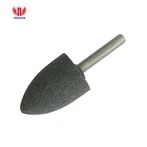
The profile of gear milling cutters, profile grinders, milling cutters and profile grinding wheels is the profile size of the tooth grooves of the gear teeth.
2. Expansion method processing:
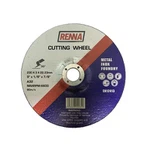
Gear hobbing, gear shaping, gear grinding (including worm grinding wheel gear grinding machines, the grinding wheel profile is a rack type.) Both the generating grinding and the forming grinding use a single-piece grinding wheel, which is a grinding of one tooth and one tooth. Grinding wheels are larger than profile grinding wheels. The forming grinding uses the principle of involute formation; the forming grinding is to repair the grinding wheel into the shape of the involute of the gear. The diameter of the grinding wheel used for worm grinding is similar to that of generative grinding, and it is thicker than it. Worm grinding is based on the principle of rack and gear meshing. Other aspects of efficiency and accuracy can be analyzed by yourself.

Cylindrical worm drive
The tooth surfaces of ordinary cylindrical worms (except ZK-type worms) are generally turned on lathes with straight-edged turning tools. According to the different installation positions of the turning tool, the tooth profile curves of the machined worm tooth surface in different sections are also different. According to different tooth profile curves, ordinary cylindrical worms can be divided into Archimedes worms (ZA worms), involute worms (ZI worms), normal straight profile worms (ZN worms) and conical enveloping cylindrical worms (ZK worms). worm) and other four. GB10085-88 recommends using ZI worm and ZK worm.
Archimedes worm (ZA worm)
This kind of worm, on the plane perpendicular to the worm axis (ie the end face), the tooth profile is an Archimedes spiral, the tooth profile on the plane containing the axis (ie the axial tooth profile) is a straight line, and its tooth profile angle α0=20°. It can be turned on a lathe with a single tool (when the lead angle γ≤3°) or a double tool (when γ>3°) with a straight edge. When installing the tool, the top surface of the cutting edge must pass through the axis of the worm. This kind of worm is difficult to grind, and it is inconvenient to process when the lead angle is large.
Normal straight profile worm (ZN worm)
The tooth profile of the end face of this worm is an extended involute, and the normal (N-N) tooth profile is a straight line. The ZN worm is also turned on a lathe with a single or double tool with a straight edge. This worm is also more difficult to grind.
Involute worm (ZI worm)
The tooth profile on the end face of this worm is involute, so it is equivalent to an involute cylindrical helical gear with a small number of teeth (the number of teeth is equal to the number of worm heads) and a large helix angle. ZI worms can be turned on a lathe with two straight-edged turning tools. The top surface of the cutting edge should be tangent to the base cylinder, with one tool above the worm axis and the other below the worm axis. The tooth profile angle of the tool should be equal to the base cylindrical helix angle of the worm. This worm can be ground on a special machine.
Cone enveloping cylindrical worm (ZK worm)
This is a nonlinear helical surface worm. It cannot be machined on a lathe, it can only be milled on a milling machine and ground on a grinder. During processing, in addition to the helical motion of the workpiece, the tool rotates around its own axis at the same time. At this time, the envelope surface of the rotary surface of the milling cutter (or grinding wheel) is the helical tooth surface of the worm, and the tooth profiles on the I-I and N-N sections are all curves. This kind of worm is easy to grind, and the worm has high precision and is widely used.
As for the worm gear tooth profile paired with the above types of worms, it completely varies with the tooth profile of the worm. Worm gears are generally machined with a hob or fly cutter on a gear hobbing machine. In order to ensure that the worm and the worm gear can mesh correctly, the tooth profile of the hob cutting worm gear should be consistent with the tooth profile of the worm; the center distance during deep cutting should also be the same as the center distance of the worm drive.