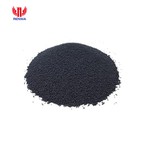
In the transformation of raw clay into exquisite ceramic products, one material plays a crucial role: calcined alumina. This special type of alumina, processed through high-temperature calcination, possesses excellent properties that make it a key component supporting the development of the ceramics industry.
The unique properties of calcined alumina:
Calcined alumina is an inorganic non-metallic material produced by high-temperature calcination of industrial alumina. It possesses numerous remarkable properties.
Firstly, its high hardness is a key characteristic; with a Mohs hardness of 9, it is second only to diamond, making ceramics made from it highly wear-resistant and capable of maintaining good appearance and structural stability over long periods of use.
Secondly, it exhibits excellent high-temperature resistance, able to withstand temperatures of over 1000°C without deformation or damage, making it ideal for high-temperature ceramic applications.
Furthermore, it has good chemical stability, resisting chemical reactions with other substances and ensuring stable performance of the ceramic products.
Finally, its excellent insulating properties make it an ideal material for manufacturing electronic ceramics.

The main function of calcined alumina in glazes:
Calcined alumina, with its high purity, high hardness, and excellent chemical stability, finds widespread application in the field of ceramic glazes, particularly in glazes for tableware, building ceramics, and special-purpose ceramics.
In practical applications, it significantly enhances the hardness and abrasion resistance of the glaze surface, effectively reducing scratches and wear on ceramic products and extending their lifespan. It also improves the chemical stability of the glaze, reducing the risk of corrosion by acids and alkalis, and enhancing the stain resistance and durability of the product.
Furthermore, the addition of calcined alumina in appropriate amounts can adjust the melting temperature and viscosity of the glaze, improving its flowability and preventing defects such as pinholes and crazing, resulting in a smoother and more uniform glaze surface.
Its unique optical properties also allow for control of the glaze's gloss, adding a subtle texture to matte glazes and enhancing the uniformity of gloss in glossy glazes, thus meeting the diverse aesthetic design needs of various ceramic products.
The importance of calcined alumina:
Calcined alumina (Al₂O₃) is a key functional raw material in the ceramic glaze industry, playing a crucial role throughout the entire process, from controlling glaze properties and ensuring colorant stability to enhancing product quality.
From a fundamental perspective, its high Mohs hardness of 9, combined with its interaction with components like SiO₂ and CaO in the glaze, forms a dense aluminosilicate glass or mullite phase, increasing the glaze surface hardness from the typical 5-6 Mohs to 7-8. This significantly improves the scratch and wear resistance of high-traffic ceramic products like floor tiles and countertops, extending their lifespan.
Furthermore, its low coefficient of thermal expansion (approximately 7×10⁻⁶/℃, 20-1000℃) effectively regulates the overall expansion rate of the glaze, preventing "glaze cracking" caused by mismatched thermal expansion coefficients between the ceramic body and glaze, thus ensuring glaze stability.
In colorant applications, calcined alumina provides a stable carrier for metal oxide colorants (such as iron oxide and cobalt oxide), inhibiting volatilization or diffusion of the colorants at high temperatures and preventing color variations or fading. Especially in high-temperature glazes, it maintains consistent color concentration and hue, contributing to rich and long-lasting decorative effects. Therefore, it is a key driver for the development of high-performance and stable ceramic glazes.