Although alumina, corundum, ruby and sapphire have different names, their shapes, hardness, properties, and uses are also different, and their value is far apart, but their chemical composition is exactly the same, and they are all alumina.
 | 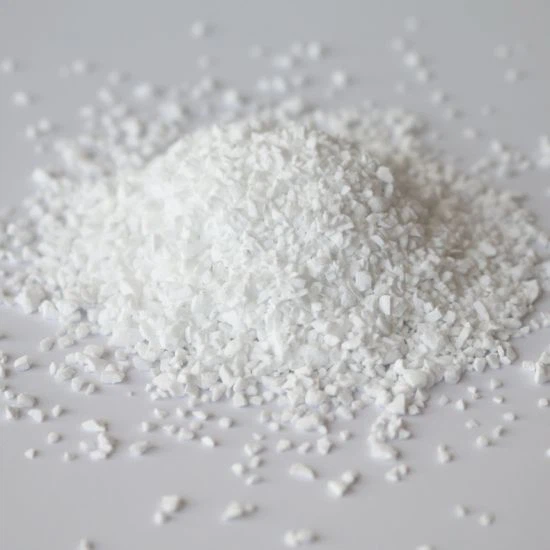 |
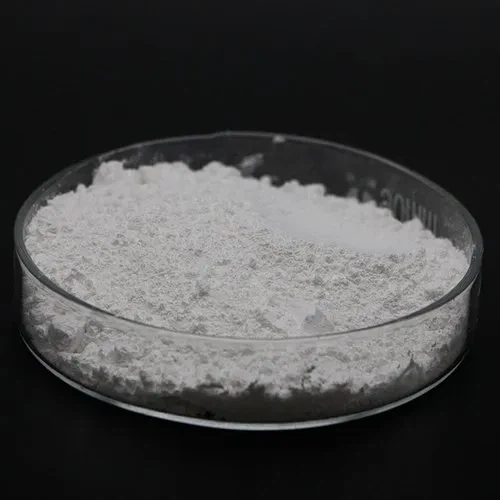
In the lattice of α-type alumina, the oxygen ions are hexagonally packed, and Al3+ is symmetrically distributed in the octahedral coordination center surrounded by the oxygen ions. The lattice energy is very large, so the melting point and boiling point are very high. Alpha alumina is insoluble in water and acid, also known as aluminum oxide in industry, and is the basic raw material for making metal aluminum; it is also used to make various refractory bricks, refractory crucibles, refractory tubes, and high temperature experimental instruments; it can also be used as an abrasive , flame retardants, fillers, etc.; high-purity alpha alumina is also the raw material for the production of artificial corundum, artificial ruby and sapphire; it is also used in the production of modern large-scale integrated circuit substrates.
γ-type alumina is obtained by dehydration of aluminum hydroxide at a low temperature of 140-150 ° C. It is also called activated alumina and aluminum glue in industry. In its structure, the oxygen ions are close-packed close to the cubic center, and Al3+ is irregularly distributed in the octahedral and tetrahedral voids surrounded by the oxygen ions. γ-type alumina is insoluble in water, but can be dissolved in strong acid or strong alkali solution, and it is completely converted into α-type alumina when it is heated to 1200 °C. γ-type alumina is a porous material, with an internal surface area of hundreds of square meters per gram, high activity and strong adsorption capacity. Industrial products are usually colorless or slightly pink cylindrical particles with good pressure resistance.It is a commonly used adsorbent, catalyst and catalyst carrier in petroleum refining and petrochemical industry; it is a deacidifying agent for transformer oil and turbine oil in industry, and is also used for chromatographic analysis; it is a neutral strong desiccant in the laboratory , its drying capacity is no less than that of phosphorus pentoxide, and it can be regenerated and reused after heating for 6-8h below 175 °C.
At present, the alumina produced by the Bayer method in the world accounts for more than 90% of the total output. Most of the alumina is used to make metal aluminum, and less than 10% is used for other purposes.

The naturally occurring α-type alumina crystal is called corundum, which often presents different colors due to different impurities. Corundum is generally blue or yellowish gray, with glass or diamond luster, density of 3.9-4.1g/cm3, hardness of 8.8, second only to diamond and silicon carbide, and can withstand high temperatures.Corundum sand containing iron oxides is called emery, dark gray and dark black, often used as abrasive materials, used to make various abrasive papers, grinding wheels, grinding stones, and also used to process optical instruments and certain metal products
Because the output of natural corundum is in short supply, the industry often sinters pure α-type alumina powder in a high-temperature electric furnace to make artificial corundum, also known as fused corundum.It can withstand high temperatures above 1800 ℃, and is the raw material for the manufacture of advanced special refractory materials. It has the characteristics of high mechanical strength at high temperature, good thermal shock resistance, strong erosion resistance, and small thermal expansion coefficient. , Nozzle, radar antenna protective cover, atomic energy reactor materials, advanced high-frequency insulating ceramics, crucibles for smelting pure metals and alloys, high-temperature heating elements, thermocouple protection tubes, linings of various high-temperature furnaces, etc. Artificial corundum is also used to make precision instrument bearings and wire drawing dies.
High-quality corundum mixed with a small amount of different oxide impurities is the famous ruby and sapphire.
 |  |
Ruby is a naturally-produced transparent red corundum, with colors ranging from pale rose red to deep carmine, some with a purplish hue, and some with starlight, with pigeon blood red being the most commercially valuable. The red color is because the crystal contains a small amount of chromium oxide. Ruby is the treasure among gems, the birthstone for July. Ruby is Ruby in English, derived from the Latin ruber meaning red, with a hardness of 9, a density of 4g/cm3, and a diamond luster.There are not many natural rubies weighing 1 carat, and more than 5 carats are rare. Among the rubies mined every year in the world, the best quality only accounts for one thousandth. The world's largest natural ruby so far discovered weighs 3450 carats from Myanmar, the world-famous giant star ruby weighs 138.7 carats, and the famous pigeon blood ruby weighs 55 carats.The most famous origin of rubies in the world is the northeastern part of Mandela, Myanmar, as well as Thailand, Sri Lanka and Cambodia. Large-scale ruby deposits were discovered successively in Nganga, Kenya, Africa in 1973, Alispoli in central Australia in 1978, and Hunza, Pakistan in the late 1970s.