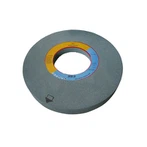
Cut off wheels for stainless steels are used for cutting stainless steel. Because they are used for cutting stainless steel, the materials used are quite particular. What exactly are these particularities? I wonder if you know? This material is actually quite common in our daily lives!
Material introduction of cut off wheels for stainless steels
1. Brown aluminum oxide:
Made from bauxite and coke (anthracite) as main raw materials, it is smelted at high temperature in an electric arc furnace. Cut off wheels for stainless steels made from it are suitable for grinding metals with high tensile strength, such as various general-purpose steels, malleable cast iron, and hard bronze. It can also be used to manufacture high-grade refractory materials. It is characterized by high purity, good crystallinity, strong fluidity, low coefficient of linear expansion, and corrosion resistance.
2. Silicon carbide:
It is produced by high-temperature smelting in an electric resistance furnace using quartz sand, petroleum coke (or coal coke), and sawdust as raw materials. Among contemporary non-oxide high-tech refractory materials such as C, N, and B, silicon carbide is one of the most widely used and economical. It can also be called diamond grit or refractory sand.
3. White aluminum oxide:
Made from industrial alumina powder, melted in an electric arc at a temperature above 2000 degrees Celsius and then cooled. After crushing, shaping, magnetic separation to remove iron, and sieving into various particle sizes, it has a dense texture, high hardness, and sharp-angled particle shape. It is suitable for manufacturing ceramics, resin-bonded abrasives, as well as grinding, polishing, sandblasting, precision casting (corundum for precision casting), etc. It can also be used to manufacture high-grade refractory materials.
These three types of cut off wheels for stainless steels are relatively common materials. As mentioned before, stainless steel is a relatively special material, so the requirements are also relatively high.