Rolls are an important part of the rolling mill, which uses the pressure generated when a pair or group of rolls roll to roll the steel.
Common rolls are cast steel rolls, cast iron rolls and forged rolls, and there are a small amount of carbide rolls on profile rolling mills.
The rolls are often worn due to the dynamic and static loads during rolling. At the same time, the temperature changes will also cause the rolls to deform, so they need to be reground.
In the general steel industry, roll grinding is divided into cold rolling and hot rolling grinding. Whether it is hot rolling or cold rolling, there are usually three types of rolls that need to be ground: work rolls, intermediate rolls, and backup rolls.
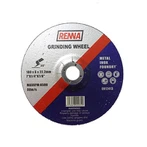
Roller grinding wheel has alumina, silicon carbide and ceramic abrasives, with special bonding agent, particle size range: 24#-1000#, general hardness range: C-N, product outer diameter 450mm-1100mm, thickness about 35mm-152mm.
The main shapes of grinding wheels are:
Type 1=parallel grinding wheel
Type 5=single-sided concave grinding wheel
Type 7=double-sided concave grinding wheel
Type 21=double-sided tapered concave grinding wheel.
Grinding wheels are usually wet-grinded with a 2-3% concentration of water-soluble emulsion.