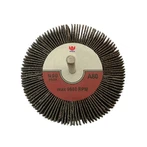
Although resinoid grinding wheels have a wide range of applications, if they are not stored and maintained correctly, their effectiveness will inevitably be affected. So how to store resinoid grinding wheels correctly in winter?
1. When transporting and storing resin grinding wheels, be careful not to collide. Resin bonded grinding wheels are prone to chips and breakage after collision.
2. Do not come into contact with corrosive gases and liquids, especially resin-bonded diamond grinding wheels. Contact with corrosive chemicals will change the properties of the resin.
3. Due to the aging of the resin, the storage period of the resin grinding wheel should generally not exceed one year. Otherwise, its normal use will be affected. If it must be used, relevant safety testing must be carried out.
4. When the resin grinding wheel is not in use, try to keep the grinding wheel at room temperature to avoid contact with high or low temperatures.
5. Resinoid grinding wheels should be covered with a protective cover to prevent any dust, dirt, or debris from getting onto the wheel. This will help to maintain the quality of the wheel and extend its lifespan.
6. Resinoid grinding wheels should be stored vertically, with the larger diameter facing down. This will prevent any deformation or warping of the wheel, ensuring that it performs optimally when in use.
7. It is important to inspect resinoid grinding wheels regularly, even when they are in storage. Look for any signs of damage or wear and tear, and replace any damaged wheels immediately to prevent accidents and injuries.