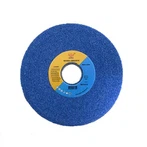
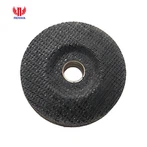
Resinoid grinding wheels are widely used. Common varieties include rough grinding wheels, high-speed reinforced cutting blade grinding wheels, high-speed grinding wheels, and bolt-fastened grinding wheels. However, how much do you know about the applications and characteristics of resinoid grinding wheels?
Common types of resinoid grinding wheels:
1. Rough grinding wheel
Rough grinding wheel is mainly used in the steel industry for grinding ingots, billets, steel plates and surface cleaning of various castings. In terms of output, it ranks first among various resin abrasives.
2. High-speed reinforced cutting wheel
High-speed cutting wheel is developed on the basis of ordinary cutting wheel according to the requirements of grinding process. The use speed is 70-80M/S. It has the advantages of high cutting efficiency, good impact resistance and bending resistance. At present, it has developed from cutting small metal materials to cutting large-size steel and steel plates. The specifications of grinding wheels are increasing, and the output is also increasing, second only to rough grinding wheels.
3. High-speed grinding wheel
High-speed grinding wheel is widely used in metallurgy, chemical industry, shipbuilding and other mechanical processing industries to grind welds, clean burrs of castings and metal surfaces. There are many specifications of the product, and the use speed is 60-80M/S.
4. Bolt tightening grinding wheel
It is commonly used in grinding processing industries such as automobiles, tractors and bearings. Its outstanding feature is: it adopts surface grinding technology. It can be made into a variety of grinding tools such as atmospheric grinding wheels and slotted grinding wheels, which greatly improves the grinding performance of the grinding wheel.
In addition, some resin grinding wheels are also widely used in various industries, replacing ceramic grinding wheels and rubber grinding wheels to varying degrees.

Characteristics of resinoid grinding wheels:
1. High bonding strength
Resin binder has higher bonding strength than ceramic binder, and the mechanical strength of the abrasive tool made of it is higher than that of ceramic abrasive tool. It can be used at higher speeds, can withstand greater grinding pressure, and is relatively safe to operate, so it is widely used in rough grinding processes in industries such as steel, automobile bearings, chemical machinery, and construction.
2. Has a certain elasticity
Resin is a polymer compound with a certain toughness and elastic deformation, which can buffer the grinding pressure, so the grinding effect is good, it has a good polishing effect, and can improve the surface processing quality of the workpiece.
3. Wide range of applications
With the emergence of new resins, resin abrasive tools of various strengths and properties can be made, which can be used for rough grinding, rough grinding, cutting, semi-fine grinding, fine grinding, polishing and other abrasive tools.
4. Can be made into abrasive tools with various special shape requirements
Resin binder has a low hardening temperature and a small shrinkage rate, and can be made into abrasive tools with various complex shapes and special requirements. Such as cymbal-shaped grinding wheels and high-speed cutting discs with mesh cloth.
5. Low heat resistance, not prone to burns
The resin bond has low heat resistance and is easily carbonized when heated during grinding, which causes the blunted abrasive particles to fall off automatically, exposing new sharp abrasive particles, reducing the heat in the grinding area, and avoiding workpiece burns; therefore, it is more suitable for surface grinding, etc., but the wear is greater than that of ceramic abrasives.
6. Short production cycle
The production cycle of resinoid grinding wheels is short, the equipment is simple and the investment is small, the capital turnover is fast, the production efficiency is high, and it is conducive to specialized production.
7. Poor chemical stability
Generally, resinoid grinding wheels have poor alkali resistance and water resistance and cannot be stored for a long time. When encountering alkaline substances, the resin structure degrades, affecting the strength and hardness of the abrasive.
In addition, resinoid grinding wheels are expensive and have a poor production environment.