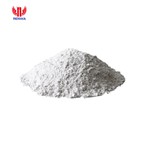
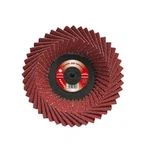
In the field of industrial materials, white fused alumina and glass beads are both highly anticipated products, each of which plays an indispensable role in specific application fields. However, most people do not know much about these two abrasives.
Differences between white Aluminum Oxide and glass Beads in performance, application and market value
First of all, from the perspective of material composition and properties, white fused alumina is an aluminum oxide crystal with the characteristics of high hardness, high wear resistance and high melting point. It has good chemical stability and is not easily corroded by acids and alkalis, so it is often used as an abrasive, grinding medium and high-grade refractory material. Glass beads are tiny particles made of glass with a smooth surface and good reflectivity and filling properties. Although the hardness of glass beads is not as good as that of white aluminum oxide, it is round and scratch-free, with good wear resistance and impact resistance. It is widely used in coatings, plastics, rubber and other fields.
In terms of usage, white fused alumina is often used to make grinding tools such as grinding wheels and sandpaper, as well as for polishing and grinding in precision casting, ceramics, glass and other industries due to its excellent grinding performance. Glass beads are widely used in reflective coatings, road sign paints, anti-skid pavements and other fields due to their good reflectivity and filling properties. In addition, glass beads can also be used as reinforcing materials to improve the mechanical properties and wear resistance of composite materials such as plastics and rubber.
From the perspective of market value, both white aluminum oxide and glass beads have certain economic value. With the continuous development of the industrial field and the increasing demand for high-quality materials, the market demand for these two materials is also growing continuously. However, due to the high mining and processing costs of white fused alumina, its market price is relatively high; while the production process of glass beads is relatively mature and the cost is low, so the market price is relatively low.
Of course, there is no simple distinction between white aluminum oxideand glass beads, but each has its own advantages and characteristics. When choosing to use, it is necessary to weigh them according to specific application scenarios and needs. For example, white fused alumina is suitable for use in situations where high hardness and high wear resistance are required; glass microspheres are more advantageous in situations where good reflectivity and filling properties are required.
In summary, although white aluminum oxide and glass beads are both important materials in the industrial field, they have obvious differences in composition, properties, uses, and market value.