
Molding density refers to the mass per unit volume of the mold blank (wet or dry). It is necessary data for calculating the feed mass, organization number, etc., and is an important factor in controlling the quality of the mold.
Common density forms:
1. Mold cavity density: This density is equal to the mass of the molding material divided by the volume of the molding mold cavity.
2. Forming density: The mass of the formed wet wheel blank divided by the volume of the wet wheel blank. The difference between the wet blank volume and the mold cavity volume is due to the rebound of the blank. The rebound of the blank of loose-textured grinding wheels and good-performance binders can be ignored, but for high-pressure molding, using non-aqueous binders, the blank has considerable rebound, which must be considered under normal circumstances.
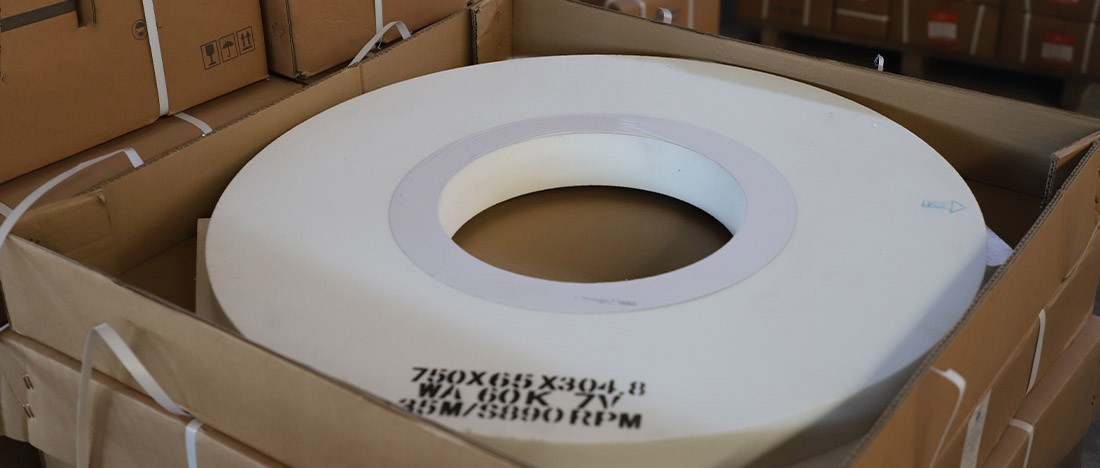
3. Inorganic (green) forming density: This density is only applicable to the formula table. It is a purely theoretical expression. It is the (inorganic) density obtained by removing the flammable temporary binder (such as dextrin), pore former and water from the weight of the abrasive blank. When calculating the unit weight of the vitrified bond roll grinding wheel, find the given inorganic forming density in the formula table. This density only includes the mass of the abrasive and the binder, then add the mass of the temporary binder, water and pore former, and finally calculate the actual unit weight of the vitrified bond roll grinding wheel.
The advantage of using inorganic molding density is that any changes in temporary binder and water content can be easily taken into account in the calculation, that is, the part of the molding density that has an effect on the hardness of the mold and the part that has no effect on it are separated.
4. Finished product density: the mass of the abrasive divided by the volume of the abrasive. The difference between the finished product density and the inorganic molding density depends on the burning loss of the binder clay mass, the burning loss of the abrasive mass, and the volume change of the abrasive body related to the formula. Except for fine-grained, high-hardness corundum grinding wheels, the weight loss and weight gain of the two offset each other, and the finished product density is roughly equal to the inorganic molding density.


