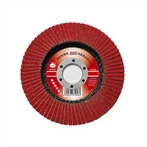
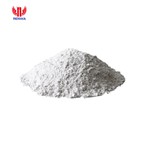
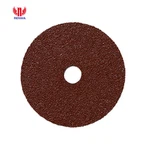
When used as an abrasive, the particle strength of black silicon carbide is an important factor affecting both grinding performance and service life. Its crystals form and aggregate under high-temperature conditions, eventually developing into a sintered structure. Depending on the application, black silicon carbide can be processed into different products with suitable mechanical properties and a long service life.
Strength Requirements of Black Silicon Carbide
The strength of black silicon carbide can be evaluated under a static load using a crushing test. A 5 g sample is placed on the surface of a cylindrical plate, and another cylindrical plate is placed on top. Pressure is then applied at 30 kg/cm² to crush part of the black silicon carbide. The crushed material is screened out, and the ratio between the weight of the remaining uncrushed particles and the original sample weight is calculated. A higher ratio indicates greater particle strength, while a lower ratio indicates weaker material.
The strength of an abrasive refers to how firmly the individual black silicon carbide particles hold together. In practical terms, it is the ability of an abrasive grain to withstand external pressure without breaking while its cutting edges are still relatively sharp. Experience shows that low-strength abrasives fracture more quickly, resulting in reduced cutting performance and a shorter service life.
Particle strength directly affects how many grains can retain their effective cutting edges and how long they can continue working efficiently. For this reason, strength is considered one of the fundamental properties of abrasive materials.
Crystallization of Black Silicon Carbide
Black silicon carbide mainly consists of the 4H polytype. In its crystal structure, silicon atoms are surrounded by carbon atoms, forming silicon-carbon tetrahedra. The unit cells of different silicon carbide polytypes are built from the same basic silicon-carbon tetrahedral structure. Differences in the number of atomic layers and their relative stacking positions within the unit cell result in different silicon carbide polytypes.
When excess silicon is present, its ability to donate electrons can cause black silicon carbide to exhibit n-type semiconductor characteristics. N-type silicon carbide has relatively high resistivity and a large temperature coefficient of resistance. As the dopant concentration in the n-type semiconductor increases, its resistivity decreases, while its linearity becomes poorer.
Among the different silicon carbide polytypes, the electrical resistivity increases as the proportion of the 6H polytype increases.