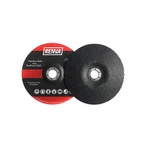
In industrial processing, DIY projects, and repair work, choosing the right abrasive can have a direct impact on sanding efficiency and final surface quality. Sandpaper and sanding blocks are both widely used, but their different designs and characteristics make them suitable for different applications. Choosing the wrong option can lead to poor sanding results or even damage the workpiece.
1. Core Difference
Both products are abrasive tools, but their main difference lies in the backing material.
Regular sandpaper:
Uses paper or cloth as the backing.
Sanding block:
Uses a flexible sponge or TPU backing. This difference directly affects how the abrasive conforms to the workpiece and where it can be used effectively.
2. Key Differences
01. Application
Regular sandpaper:
Best suited for sanding relatively flat surfaces, such as removing burrs from wood panels or stripping old paint from walls.
Sanding block:
Performs particularly well on curved surfaces, grooves, and other irregular areas. Its flexible construction allows it to follow the shape of the workpiece while reducing missed areas and the risk of damaging edges.
02. Shapes and Sizes
Regular sandpaper:
Usually available in sheets, such as A4-size sheets, or rolls. Its shape is relatively simple and can be cut to size when needed.
Sanding block:
Can be produced in various shapes, including square, cylindrical, and wedge forms, making it suitable for specialized areas such as screw holes, furniture edges, and other hard-to-reach surfaces.
03. Sanding Performance
Regular sandpaper:
Made with high-quality abrasive grains and advanced electrostatic coating technology. Its uniform grain distribution provides efficient material removal, long service life, fast heat dissipation, and good resistance to loading.
Sanding block:
Offers excellent water resistance and can be used for both dry and wet sanding. Dry sanding is suitable for materials such as wood and plastic, while wet sanding can be used for metal rust removal and automotive surface preparation. Wet sanding also helps reduce dust and improve finishing accuracy.
3. Selection Guide
For flat surfaces: Choose regular sandpaper.
For curved or irregular surfaces, wet sanding, or detailed finishing: Choose a sanding block.
4. How to Choose the Right Sandpaper
01. Define the Sanding Application
Start by identifying the material you need to work on, such as metal, wood, or another substrate. Different materials require different abrasive types. For example, aluminum oxide sandpaper is generally suitable for metal, while silicon carbide sandpaper can be a better choice for certain woodworking applications.
02. Consider the Required Finish
Choose the abrasive grit according to the desired surface finish. Coarser grits are suitable for removing rough surfaces, burrs, or larger defects, while finer grits are better for finishing and polishing.
03. Check Abrasive Quality
High-quality sandpaper should have strong abrasive adhesion so that the grains remain securely attached during use. The backing should also be durable and resistant to tearing. When selecting a product, check whether the abrasive grains are evenly distributed and firmly bonded to the backing.
04. Understand Grit Standards
For applications requiring precise surface finishing, make sure you understand the grit standard of the product. Check the manufacturer's specifications or consult the supplier to confirm that the selected grit matches your actual sanding requirements.