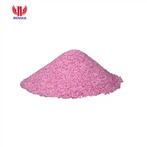
The types of abrasives can be divided into two categories according to the material: non-metallic abrasives and metal abrasives.
Non-metallic abrasives generally include copper ore, quartz sand, river sand, corundum, glass, etc. Due to the extremely high crushing rate of non-metallic abrasives, a lot of dust, serious pollution and low efficiency, except for a few that continue to be used, most of them have been gradually replaced by metal abrasives.
Metal abrasives represent cast steel shot (high carbon and low carbon), steel grit, iron shot, iron grit, stainless steel shot, wire cut shot, bearing steel grit.


Hardness of Metal Abrasives
The hardness requirements of the abrasive can be determined according to the surface state of the workpiece. Generally speaking, the hardness value should be higher than the surface hardness of the workpiece HRC3~HRC10. The hardness of the abrasive affects the cleaning speed and effect.
When the abrasive particles impact the surface of the workpiece at high speed, the impact kinetic energy applied to them by the equipment, at the moment of impact, part of the energy is always consumed in the deformation of the abrasive, which cannot be completely transferred to the surface of the impacted workpiece, and does not complete the effective effect. The energy consumed is largely determined by the hardness of the abrasive.
The so-called hardness is defined as the ability to resist deformation. The higher the hardness, the greater the resistance to deformation, the greater the percentage of energy transferred to the surface of the workpiece, and the more obvious the cleaning effect.
In general, the ideal hardness range of abrasives should be moderate, too hard is easy to break, too soft is easy to deform. Some high-hardness abrasives (such as cast iron shot) can be quickly cleaned or strengthened, and the price of the abrasive is also low, but these abrasives are fragile and high in consumption, which may also cause premature wear of the wearing parts of the shot blasting equipment and increase maintenance costs; on the contrary Yes, other low-hardness abrasives have a low consumption rate and low price, but they have long cleaning cycles, low productivity, and waste of labor and operating time.
Crushing Performance of Metal Abrasives
The crushing characteristics of the abrasive will directly affect the cost, maintenance cost and cleaning effect of the abrasive.
Due to the difference in chemical composition, production process and metallographic structure, the inherent fatigue characteristics of each abrasive are different, which determines its different crushing characteristics in shot blasting equipment.
The crushing of abrasive means that in the shot blasting cleaning equipment, abrasive particles are thrown out at a very high speed and impact on the surface of the workpiece. When the cleaning and strengthening tasks are completed, the abrasive itself is consumed by impact and wears the equipment at the same time. Through continuous circulation and repeated impact, from large particles to small particles, from small particles to smaller particles, and finally because the particles are too small (less than 0.2mm) to be used, they are removed by the shot blasting equipment and the dust removal system.
The crushing rate of the abrasive also determines the amount of new sharp-cornered particles formed in the operation. Sharp corners cause large resistance, which leads to poor circulation of abrasives, which is prone to scratches and damage to equipment components.
Therefore, the crushing performance of abrasives is an important criterion for measuring high-quality abrasives.
Abrasive Size Selection
Conventional abrasive diameters range from 0.3mm to 2.8mm. The larger the abrasive type, the faster the shot blasting efficiency, but the greater the surface roughness of the shot blasting workpiece, the opposite is true; therefore, it is particularly critical to select the type of shot blasting abrasive that is suitable for the size of the workpiece.

Note
For new equipment feeding, a single abrasive cannot be used, and a certain thickness and fineness must be mixed to obtain good coverage and cleaning efficiency.