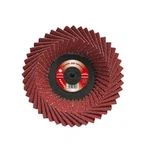
When compared to white fused alumina, brown fused alumina has one characteristic that cannot be ignored: toughness. Many people may not pay much attention to it, but it is undeniable that the toughness of brown aluminum oxide is actually quite important.
What is the use of the toughness of brown fused alumina?
Brown aluminum oxide possesses a certain degree of toughness, which helps ensure its lifespan. We know that the better the toughness of brown fused alumina, the stronger its resistance to breakage, making it less prone to fracture and thus extending its lifespan.
So what does the toughness of brown aluminum oxide depend on?
1. Alumina content
Generally speaking, the lower the aluminum content, the lower the toughness. However, if we understand that the higher the aluminum content, the better the toughness, then white fused alumina has a very high aluminum content, so why is its toughness so poor? This is not true. Therefore, this only applies to brown fused alumina.
2. Carbon content
The lower the carbon content of brown aluminum oxide, the better its toughness. Generally, low-carbon brown fused alumina has very good toughness.
3. Whether it has undergone high-temperature calcination
High-temperature calcination of brown aluminum oxide not only removes a significant amount of carbon but also a considerable amount of magnetic material, resulting in excellent toughness.
However, there is a limit to the toughness of brown fused alumina. Although brown aluminum oxide has good toughness, excessive toughness will affect its performance. For example, excessive toughness will affect the self-sharpening property of brown fused alumina.