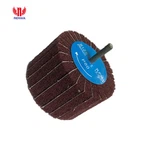
When it comes to cutting and grinding applications, many users first think of resinoid grinding wheels because of their affordability, high strength, and wide range of uses. By adding different materials into the resin bond, these wheels can also achieve better wear resistance and improved grinding performance. However, compared with diamond grinding wheels, resinoid grinding wheels have different characteristics and application advantages.
Different Bonding Materials and Performance
A resinoid grinding wheel uses a resin bond to hold abrasive grains together. This type of grinding wheel offers high impact resistance and a certain degree of flexibility, allowing it to absorb vibration during grinding. It is also suitable for high-speed cutting and general grinding applications.
However, resin bonds have relatively limited heat resistance. Under high-temperature grinding conditions, the bond may soften or wear faster, which makes resinoid grinding wheels unsuitable for some demanding applications.
Diamond grinding wheels, on the other hand, use diamond abrasives with extremely high hardness. They provide excellent wear resistance, outstanding cutting ability, and superior heat resistance. However, because diamond abrasives are more difficult to process and the manufacturing process is more complex, the production cost is usually higher than that of resinoid grinding wheels.
Different Application Fields
Due to their unique properties, diamond grinding wheels and resinoid grinding wheels are designed for different working conditions.
Diamond grinding wheels are mainly used for processing hard and brittle materials that are difficult to machine with conventional abrasives. Typical applications include cemented carbide, high-alumina ceramics, optical glass, gemstones, semiconductor materials, stone, and other non-metallic materials. Their excellent cutting performance and long service life make them an ideal choice for precision grinding and high-performance machining.
Resinoid grinding wheels are more suitable for general-purpose grinding operations, including rough grinding, stock removal, cutting, and freehand grinding. Their good toughness and flexibility make them effective for applications where impact resistance and grinding efficiency are more important than extreme precision.
Choosing the Right Grinding Wheel
The choice between a diamond grinding wheel and a resinoid grinding wheel depends mainly on the material being processed, grinding requirements, and working conditions. Diamond grinding wheels are preferred for ultra-hard materials that require high precision and long-lasting performance, while resinoid grinding wheels provide a cost-effective solution for common grinding and cutting tasks.
Understanding the differences between these two types of grinding wheels helps users select the right tool, improve processing efficiency, and achieve better surface quality.