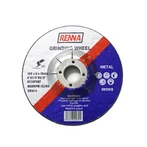
When discussing the grinding efficiency of porous vitrified grinding wheels and large pore grinding wheels, we need to consider their structural characteristics and application areas.
Porous vitrified grinding wheel
A porous vitrified grinding wheel is a type of grinding wheel that releases sand from the grinding wheel surface through gas impact. This type of grinding wheel has a unique pore structure and advanced material technology, which enables it to have a high grinding effect and service life. The pore structure of the porous vitrified grinding wheel helps to reduce heat accumulation during the grinding process and improve grinding efficiency.
Large hole grinding wheel
Large-pore grinding wheels are grinding wheels with large pores, which help reduce heat accumulation during the grinding process and improve grinding efficiency. Large-pore grinding wheels perform well when processing ultra-long and ultra-thin workpieces. For example, when processing the lip of a hot-dip galvanized air-blowing knife on a broach grinder, large-pore grinding wheels can effectively reduce thermal deformation and burn marks on the workpiece and improve production efficiency.
Grinding efficiency comparison
Although both porous vitrified grinding wheels and large-pore grinding wheels have the characteristics of improving grinding efficiency, their performance in specific applications may be different. Porous vitrified grinding wheels may show higher grinding efficiency in certain applications due to their advanced material technology and pore structure design. However, large-pore grinding wheels also show excellent grinding efficiency in specific application scenarios, such as processing ultra-long and ultra-thin workpieces.
Porous vitrified grinding wheels and large-pore grinding wheels each have their own advantages in grinding efficiency, and the specific performance depends on the application field and processing conditions. When selecting a grinding wheel, the type of grinding wheel to be used should be determined based on the specific processing requirements and workpiece characteristics.